
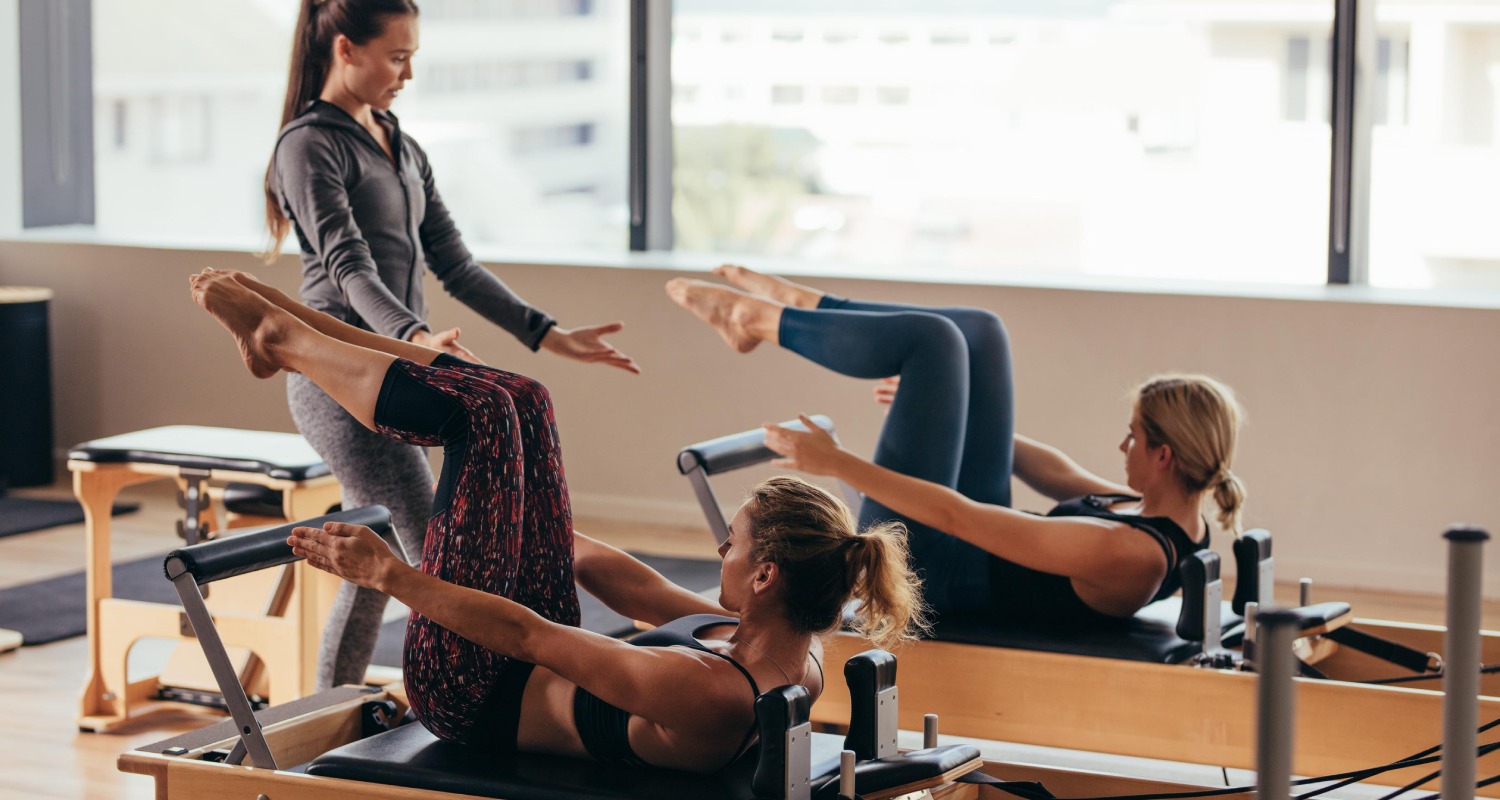
Choosing flooring for a Pilates studio requires balancing aesthetic elegance and heavy-duty performance. Unlike a traditional fitness studio built around dropped barbells and HIIT circuits, a Pilates, barre, or reformer space demands surfaces that feel good under bare feet, support precise movement, and keep heavy equipment stable class after class. Your flooring choice impacts client comfort and focus during practice, so getting it right is essential. This guide breaks down the materials, costs, and planning details fitness studio owners need in 2026.
Key Takeaways
- Engineered rubber flooring is the top-performing choice for reformer zones, offering the stability, durability, and shock absorption heavy equipment demands. Cork and high-quality vinyl work well as complementary surfaces in mat and barre areas.
- Core selection criteria include barefoot grip, comfort for floor work, reformer stability, acoustics for mixed-use buildings, easy cleaning, and alignment with your brand identity and studio design.
- Reformer zones typically perform best on firm, high-density rolled rubber flooring, while mat Pilates and barre areas can use cork, vinyl, or hybrid solutions depending on aesthetic appeal and budget.
- Professional planning and installation, rather than pure DIY installation, are key to preventing equipment shifting, noise complaints, and premature wear.
- Flooring thickness and density should be matched to the load: cushioned mat areas versus firmer, denser flooring under reformers and towers.
Create the Right Fitness Environment With Specialized Fitness Resources
Whether you are opening a new Pilates or barre studio, renovating an existing facility, or upgrading a multi-use fitness space, Specialized Fitness Resources can help you choose solutions that fit your facility, training needs, and design goals. With more than 28 years of experience in the rubber and fitness industry, we provide fitness flooring, specialty products, equipment, and installation services for facilities of all types.
Contact Specialized Fitness Resources today to discuss your project and find the right solutions for your facility.
Why Pilates, Barre & Reformer Studios Need Different Flooring Than Traditional Gyms
Pilates, barre, and reformer spaces are barefoot, low-impact, and equipment-specific. Clients spend extended periods in direct contact with the surface, with hands, knees, hips, and feet pressing into the floor during every class. That kind of sustained body contact makes surface feel, warmth, and temperature far more important than in a general workout space.
Traditional home gym flooring or weight-room rubber is designed to survive dropped plates. Studio flooring needs to support controlled movement, precise balance poses, and graceful dance-inspired transitions in barre and reformer sessions. Wood floors provide stability and shock absorption for Pilates and enhance the aesthetic and ambiance of a studio, but they come with trade-offs around maintenance and moisture that make them a less practical primary surface for high-traffic commercial use.
Flooring also helps create a welcoming atmosphere. Alongside natural light, mirrors, neutral tones, and good lighting, the right surface supports mindful Pilates practice and reinforces a premium brand identity. Poor flooring choices can cause joint discomfort, excess sound transmission to neighbors, unstable reformers, and a visual feel that clashes with your studio’s design concept.
Also Read: What Does It Take to Create a High-Performance Fitness Center in a Miami Luxury Community?
What to Look For in Pilates Studio & Barre Flooring
Before comparing materials, establish what matters most in your studio space:
- Grip and movement: Slip resistance is essential for barefoot work in Pilates and barre. Surfaces must offer traction for lunges, relevés, planks, and balance work without being so sticky they tear grip socks or irritate skin. Commercial flooring slip resistance is generally benchmarked against the ANSI A326.3 wet dynamic coefficient of friction (DCOF) standard, which sets a minimum of 0.42 for level interior flooring expected to be walked on wet. Rubber flooring naturally performs well against this benchmark even under sweat, which is one reason it’s favored for barefoot studio work.
- Comfort: Cushioned flooring absorbs impact during mat work and floor exercises without creating a spongy, misaligned feel. Interlocking foam tiles, such as our Yoga & Pilates exercise floor mats, offer great cushioning for floor exercises but are generally too soft to use directly under reformers or towers.
- Stability: Reformers require a stable, firm foundation for effective use. Flooring should be flat and consistent to prevent rocking, and non-porous surfaces are important for maintaining hygiene across all key areas.
- Acoustics: Acoustic and vibration control is critical in multi-tenant or urban environments, especially where carriages slide and springs release. Dedicated acoustic underlayment, such as Centaur Sound Reducer, is lab-tested to ASTM E2179 and rated for up to 19–26 decibels of impact sound reduction depending on thickness, with the 5mm option outperforming 12mm cork underlayment in the same test. If your yoga and pilates studio sits above or beside occupied space, ask your flooring provider about impact-sound performance and whether an acoustic underlayment fits your build-out.
- Maintenance: Choose sealed or non-porous materials that tolerate frequent disinfecting, sweat, rosin from barre, and continuous bare feet without staining.
- Aesthetics and light: Neutral tones in flooring create a calming studio environment. Color, finish, and pattern can amplify natural light in a bright, minimalist space, or support a darker, cocoon-like atmosphere for hot yoga or fusion fitness classes. Flooring is a design element that reinforces your business identity.
Which Flooring Material Is Best for Pilates, Barre & Reformer Studios?
There is no single best flooring for every Pilates studio. The ideal surface depends on whether your focus is mat Pilates, reformer training, barre, hot yoga, or multi-use programming. Below, each material is evaluated against the criteria above, with engineered rubber as the benchmark for reformer and heavy-equipment areas.
Engineered Rubber Flooring: Durable, Stable & Studio-Ready
Engineered rubber flooring is the leading commercial solution for Pilates, barre, and reformer studios that need long service life, stability, and strong traction. Modern rubber flooring for studios is no longer limited to black weight-room rolls; available finishes include color flecks, smoother textures, and lighter tones designed for boutique interiors.
High-density rubber flooring absorbs impact and helps reduce noise transmission, which matters most for sound control in shared-wall or upper-floor locations. Rubber flooring is well suited to dynamic Pilates movement: it provides shock absorption, maintains grip for barefoot footwork and planks, and delivers firm, stable support under reformers when specified at the right density for equipment loads.
Rubber flooring is easy to clean and hygienic for pilates and yoga studios, and it withstands repeated barefoot traffic without degrading. Our Everlast line, manufactured from recycled rubber, is available in rolls, basic tiles, and UltraTile formats, giving studio owners options for both smaller DIY-friendly installs and full-scale professional build-outs. As a supplier and installer of sport surfacing and specialty rubber products, our team can recommend and install the specific rubber system that fits your reformer layout and equipment loads.
A few things to plan for: rubber is heavy, so it’s worth verifying structural loading capacity for upper-floor studios. Low-VOC products with adequate airing time before occupancy are also worth requesting.
Cork Flooring: Warm, Natural & Comfortable
Cork is a renewable, warm-underfoot option that pairs well with wellness-oriented Pilates studio design. It offers thermal insulation, antimicrobial properties, and a soft surface feel that clients notice immediately.
Cork can work well in mat Pilates zones, barre areas, and small reformer rooms where natural warmth and aesthetic appeal are central to the brand. It’s worth noting that cork is more sensitive to concentrated equipment loads and standing water than rubber, and commercial installations typically need periodic resealing to hold up under continuous barefoot traffic.
Vinyl Flooring: Design Flexibility & Easy Cleaning
Vinyl is popular among boutique studios that want wood-look or stone-look aesthetics without the maintenance demands of real wood floors. Commercial-grade vinyl is durable and easy to sanitize, which is practical for studios running back-to-back class types all day.
The range of colors, patterns, and plank formats lets designers align flooring choices with brand identity. Our Luxury Vinyl Plank is a 3mm heterogeneous vinyl with 28% pre-consumer recycled content, FloorScore certified, and available with a glueless installation option, in wood-look finishes from natural oak to walnut. Luxury Vinyl Tile and SFR Luxury Woven Vinyl offer stone-look and woven-texture alternatives for studios that want a different aesthetic. Vinyl alone typically offers less impact-noise reduction than rubber, so pairing it with an acoustic underlayment like Centaur Sound Reducer is worth discussing for upper-floor or shared-wall studios. It also tends to feel cooler underfoot than rubber.
Hybrid Flooring Systems: Zoning Your Studio by Function
Hybrid systems combine two or more flooring types to serve different activities within the same space, rather than forcing one material throughout the studio. A common approach is firm engineered rubber under all reformers and towers, with vinyl in barre and stretching zones, and denser rubber in any side room used for hot yoga or high-sweat fusion classes.
The benefit is fine-tuned comfort and performance for each zone, improved longevity where heavy equipment lives, and more creative control over aesthetics across the studio. Planning requires careful transitions between surfaces so finished heights align and clients don’t trip, along with coordination around door thresholds and mirrors. Our team can help specify a hybrid layout that’s visually cohesive and straightforward to maintain.
Quick Comparison of Pilates, Barre & Reformer Flooring Options
| Flooring | Best For | Key Advantage | Main Consideration |
|---|---|---|---|
| Engineered rubber | Reformer zones, commercial use | Durability, stability, shock absorption | Aesthetic planning for a boutique look |
| Cork | Mat Pilates, barre zones | Comfort and natural warmth | Equipment load sensitivity, resealing |
| Vinyl | Boutique studios, multi-class scheduling | Design flexibility, easy cleaning | Acoustics require underlayment; cooler underfoot |
| Hybrid | Multi-zone studios | Custom performance by area | More complex installation and transitions |
Planning Flooring Around Reformers, Barres & Studio Equipment
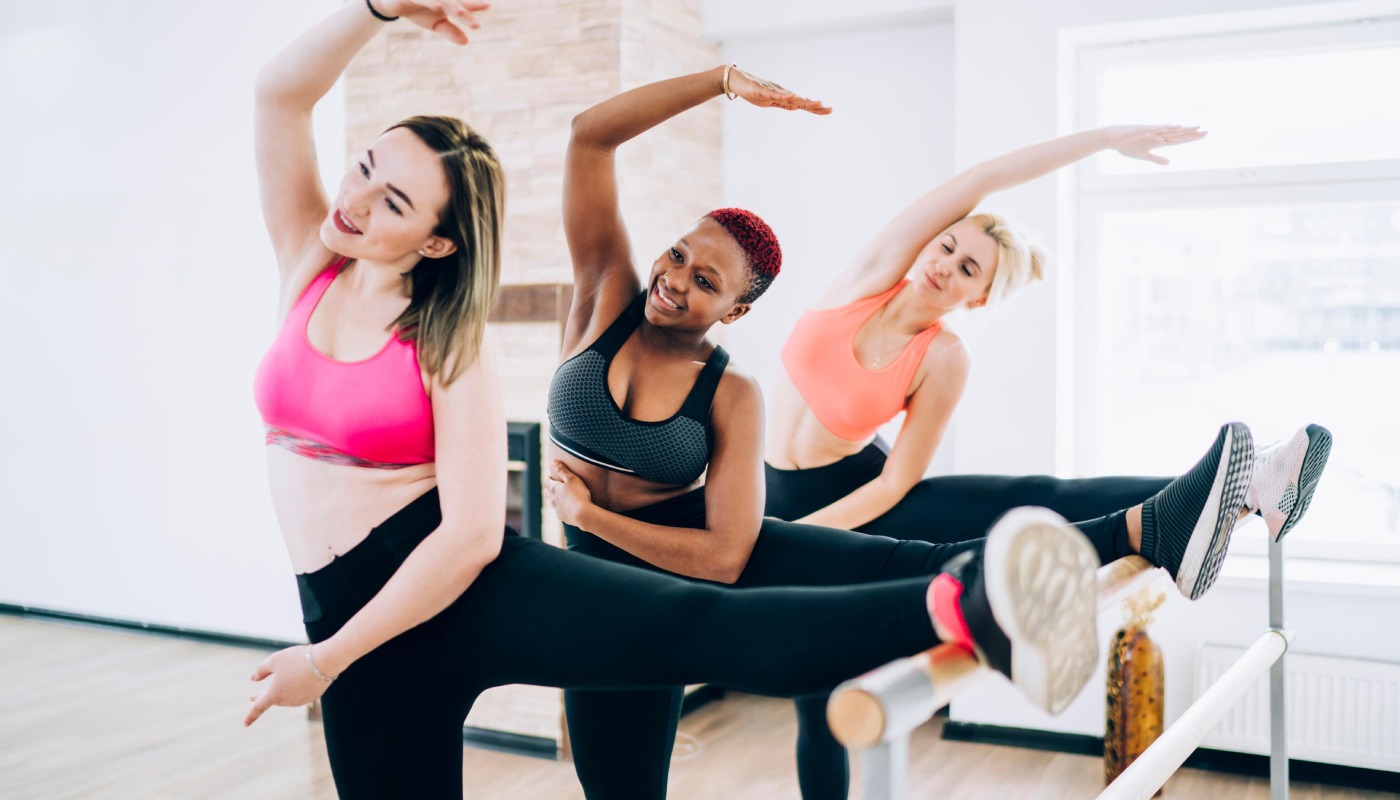
Even the best flooring material can fail if equipment placement isn’t accounted for during planning and installation.
- Subfloor evaluation: Verify that the existing concrete or wood subfloor is level, dry, and structurally sound.
- Levelness: Small dips or humps cause wobbling carriages and increased noise. Confirm leveling requirements with your equipment manufacturer.
- Equipment loads: Concentrated loads from reformer feet, towers, and integrated Cadillac-style units may require denser rubber or reinforced underlay.
- Barre fixtures: Plan flooring cuts so fixed barres and wall-mounted brackets sit cleanly, avoiding gaps that collect dirt.
- Squeaks and shifting: Proper adhesives, perimeter expansion gaps, and correct underlayment help prevent movement and unwanted noise during class.
- Professional vs. DIY installation: For larger studio projects with reformer rows, plumbing, or mixed materials, professional installation prevents problems that aren’t obvious when simply selecting a material.
What Does Pilates Studio Flooring Cost?
Pricing depends on subfloor condition, room layout, thickness selected, and equipment placement, so treat the ranges below as a starting point rather than a quote.
Typical installed cost by material:
| Material | Price Range ($/sq ft, installed) |
|---|---|
| Engineered rubber (tile/roll systems) | $5.00–$12.00 |
| Cork (sealed) | $2.30–$4.65 |
| Vinyl (commercial LVT/LVP + underlay) | $1.90–$4.20 |
| Hybrid systems | Budget above single-material cost to account for transitions and coordination |
Rubber commands a premium up front but typically delivers longer service life and better acoustic performance for reformer zones. Hybrid systems often manage cost by using premium materials only where they matter most.
Maintenance & Cleaning for Pilates, Barre & Reformer Studio Floors
- Daily: Sweep or dust-mop between sessions, with full mopping at day’s end using manufacturer-approved, neutral-pH cleaners. Avoid products that leave slippery residue.
- Weekly: Disinfect high-contact zones, scrub textured rubber surfaces, and check for rosin buildup near barre stations.
- Monthly: Inspect high-traffic lanes, around reformer feet, and under barres for early signs of wear, separation, or indentation. Non-porous flooring helps prevent trapped moisture and mold growth.
- Periodic: Reseal cork surfaces on the schedule your manufacturer recommends, and address damaged vinyl seams before moisture reaches the subfloor.
Wipe up sweat and spilled water promptly, especially in hot yoga or heated Pilates spaces where moisture is constant. When issues exceed routine care, bring in professionals for deep cleaning textured rubber, resealing cork, or repairing seams before small problems become full replacements.
Also Read: How Do You Match Flooring Materials to Your Gym’s Brand Identity in Miami, Florida?
Build Your Boutique Studio on the Right Flooring
Boutique Pilates, barre, and reformer studios need flooring selected around their specific activities and equipment, not generic gym surfaces. At Specialized Fitness Resources, we provide a wide range of sports surfacing and specialty rubber products for the fitness industry, and we supply and install the flooring rather than simply selling materials.
Ready to create the right foundation for your studio? Give us a call today at 305-752-0451 for a personalized recommendation, samples, or a project quote tailored to your space.
Frequently Asked Questions
How long does it take to install flooring in a new Pilates studio?
Most 500 to 2,000 square-foot spaces require a few working days depending on material, subfloor prep, and the complexity of cuts around reformers and barres. Additional time may be needed for adhesives to cure or sealers to off-gas before clients can safely practice barefoot.
Can I use underfloor heating with Pilates studio flooring?
Many cork, vinyl, and engineered rubber systems are compatible with radiant heat when installed according to manufacturer guidelines. Check maximum temperature limits, use compatible adhesives, and plan for slight expansion and contraction with temperature changes.
Is carpet ever a good choice for Pilates or reformer studios?
Carpet is usually discouraged due to hygiene concerns, cleaning difficulty, and unstable footing for precise Pilates and barre work. If carpet is already present in a leased space, studio owners often cover it with a floating vinyl or rubber system rather than practicing directly on it.
What happens if I change my programming after installing flooring?
Adding heavier strength or cardio classes later can strain flooring not designed for those uses. Plan for future expansion by choosing more robust materials in at least part of the studio, or confirm load and impact ratings with your flooring provider before purchase.
Do I need different flooring for hot yoga classes in my Pilates studio?
Hot yoga and heated Pilates require flooring that tolerates high heat, humidity, and continuous sweat while remaining non-slip when damp. Confirm that any cork, vinyl, or rubber product you’re considering is rated for elevated temperatures and the frequent disinfection common in hot yoga rooms.