
Durability is critical when choosing fitness flooring for Miami gyms, studios, and home gym setups. The combination of heavy traffic, intense workouts, and a harsh coastal climate puts extraordinary stress on flooring materials that typical residential carpet or concrete simply cannot handle.
Constant A/C cycling, sweat from members, and frequent cleaning with disinfectants create more wear than standard flooring types experience. Premature floor failure means major disruption, unexpected costs, and potential safety hazards for commercial facilities across Miami. This blog answers the question directly, then walks through climate impact, lifespan ranges by use type, floor comparisons, key factors, warning signs, and proven ways to extend performance.
For long-lasting, high-performance rubber flooring solutions built to withstand Miami’s demanding climate, trust Specialized Fitness Resources. With over 28 years of experience supplying and installing commercial fitness flooring across gyms, studios, and facilities, we deliver durable, eco-friendly options designed for real-world use. Contact us today at 305-752-0451 to request a quote or speak with our knowledgeable team.
Also Read: What Flooring Works Best for Aerobic Studios vs. CrossFit Boxes in Miami, FL?
How Does Miami’s Climate Affect Rubber Flooring Lifespan?
Miami’s tropical environment presents unique challenges for rubber flooring. Average highs range from the mid-70s°F in winter to the low 90s°F in peak summer, humidity consistently hovers between 70–75% year-round, and the wet season brings frequent afternoon thunderstorms totaling over 60 inches of annual rainfall.
Constant humidity creates moisture problems
High ambient moisture can migrate through concrete slabs and edges into rubber systems
Trapped moisture under poorly installed rubber leads to mold, mildew, and adhesive failure over time
High temperatures and UV exposure cause surface damage
- Non-conditioned garages and warehouse gyms can reach well above 90°F, accelerating material breakdown
- Direct sun through storefront windows or roll-up doors fades color and dries the surface, reducing slip resistance
Expansion and contraction stress seams
- Daily temperature and humidity swings cause rubber to expand and contract
- Without proper expansion tolerance, this movement opens seams, creates gaps, or causes tiles to “tent”
Common climate-related issues include:
- Surface degradation and chalky spots near south-facing entrances
- Edge curling in wet areas near doors or pool-adjacent spaces
- Musty odors when subfloor moisture isn’t properly controlled
Indoor, climate-controlled fitness centers in Miami experience significantly less degradation than open-air or partially conditioned gyms, making temperature and humidity management one of the most impactful investments a facility owner can make.
Also Read: How Can Upstairs Fitness Centers in Miami Minimize Sound and Vibration with the Right Flooring?
What Is the Average Lifespan of Rubber Flooring in Miami Gyms?
Commercial rubber gym flooring in Miami typically lasts 8–20 years, with most well-installed facilities seeing around 10–15 years before major replacement becomes necessary.
| Use Level | Typical Lifespan | Examples |
|---|---|---|
| Light use | 15–20 years | Yoga studios, stretching zones, PT rooms |
| Moderate use | 10–15 years | Group fitness rooms, cardio areas |
| Heavy use | 8–12 years | Weight rooms, CrossFit boxes, HIIT zones |
Light-use areas see minimal impact loading and benefit from rubber’s sound control and durability over extended periods.
Moderate-use zones with daily classes and moderate weights can expect 10–15 years when equipment rotation helps prevent visible wear patterns in high-traffic areas.
Heavy-use zones with free weights, sleds, and Olympic lifting platforms stress the rubber the most. Performance and safety typically justify replacement at 8–12 years, even if the floor appears functional. Note that in the most demanding environments, high-volume CrossFit boxes and Olympic lifting facilities with minimal maintenance, the lower end of that range may be reached sooner.
Targeted partial replacement, swapping tiles in deadlift zones, can extend the whole floor system’s life without redoing the entire space.
How Do Different Types of Rubber Flooring Perform Over Time?
Each rubber flooring option has strengths depending on your facility type and usage pattern.
- Rolled rubber flooring: Common commercial thicknesses of 3/8″, 1/2″, and 3/4″. 1/4″ is available but suited only to light-traffic, no-drop studio areas. Fewer seams make rolled rubber ideal for large commercial applications.
- Rubber tiles: Typically 3/8″ to 1″ for general commercial use; specialist weight room tiles are available up to 2.5″ for high-drop Olympic and extreme lifting zones. Individual tiles can be replaced without redoing the entire floor.
- Interlocking tiles: DIY-friendly for garage conversions and small training areas. Tiles can shift under thermal expansion and may separate at seams under repeated heavy rolling loads; perimeter borders are strongly recommended.
No single type is the best rubber flooring option for all cases; performance depends on whether you’re outfitting a garage, high-rise condo gym, or commercial facility.
SFR Sport Roll for Seamless, High-Performance Flooring
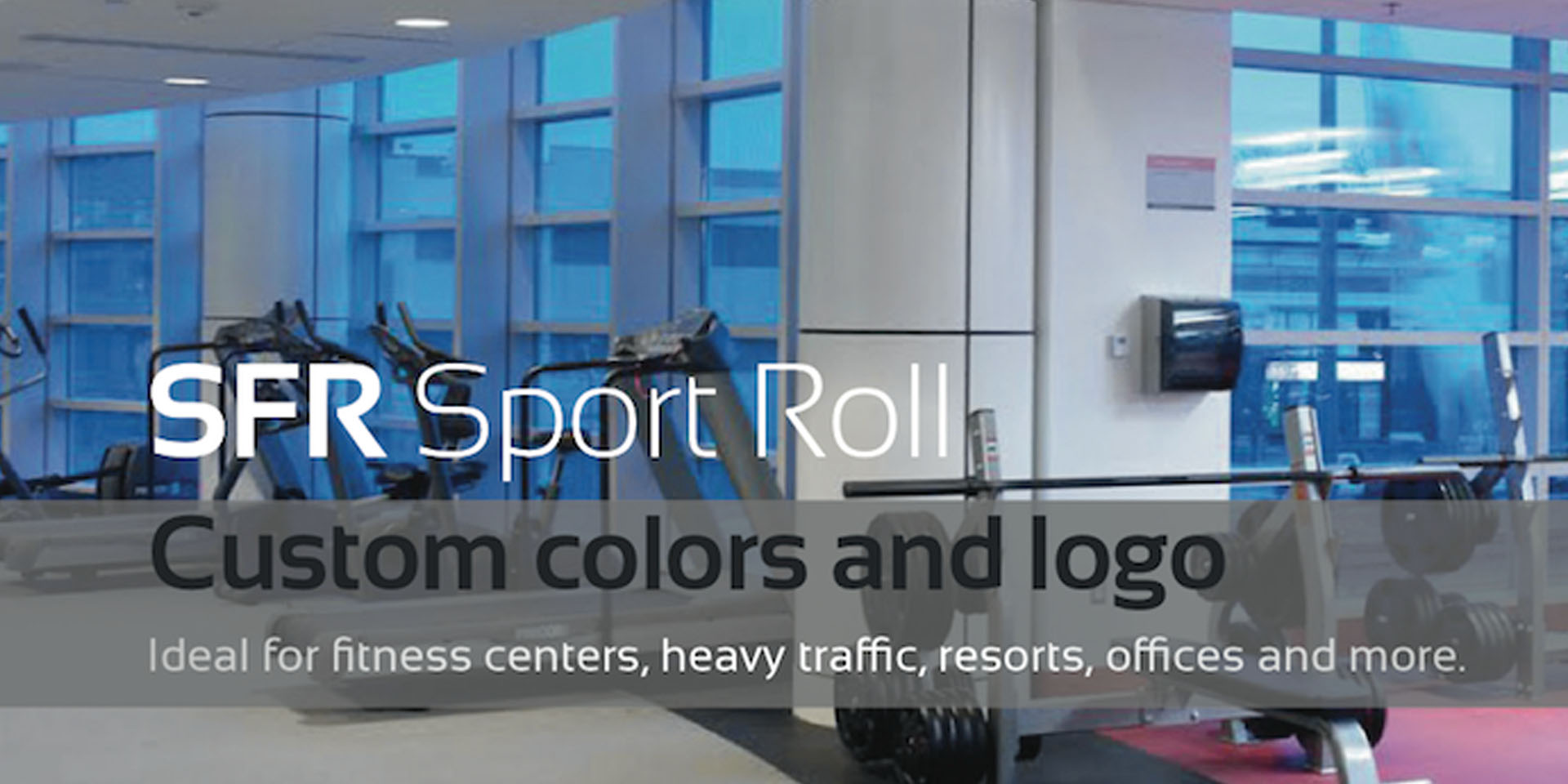
For facilities in Miami that require durability, moisture resistance, and a clean, continuous appearance, SFR Sport Roll offers a practical and design-forward solution. This rolled rubber system is engineered to perform in demanding environments while simplifying both installation and long-term maintenance.
Built for Miami’s Climate and High-Traffic Use
SFR Sport Roll is specifically suited for large-scale applications where humidity, heavy usage, and hygiene all play a role in flooring performance:
- Seamless installation: Large-format rolls (8mm x 48″ x 50′) reduce visible seams, limiting areas where moisture and debris can accumulate
- Durability: Designed to withstand constant foot traffic, equipment use, and environmental stress without premature wear
- Moisture resistance: Fewer joints help prevent water intrusion, making it well-suited for South Florida’s humid conditions
- Low maintenance: Smooth, continuous surfaces simplify cleaning in high-use fitness environments
Flexible Design Options for Any Facility
Beyond performance, SFR Sport Roll provides extensive customization to align with branding and design goals:
- Available in 10 standard colors, with additional custom color options
- Logo integration capabilities for branded fitness spaces, schools, and commercial facilities
- Suitable for both modern, minimalist designs and bold, high-energy training environments
Versatile Applications Across Fitness and Commercial Spaces
SFR Sport Roll is widely used across a range of environments where resilience and appearance both matter:
- Cardio and spin studios
- Strength training areas
- Locker rooms and lobbies
- Juice bars and café areas within gyms
- Ice and ski training facilities
- Condominium and hotel fitness centers
Installation and Performance Considerations
To maximize lifespan and performance in Miami conditions:
- Ensure proper subfloor preparation and moisture testing before installation
- Use fully adhered installation methods in large commercial spaces to prevent shifting or bubbling
- Pair with appropriate underlayments where acoustic control or added cushioning is required
SFR Power Tile: Heavy-Duty Rubber Tiles for High-Impact Training Areas
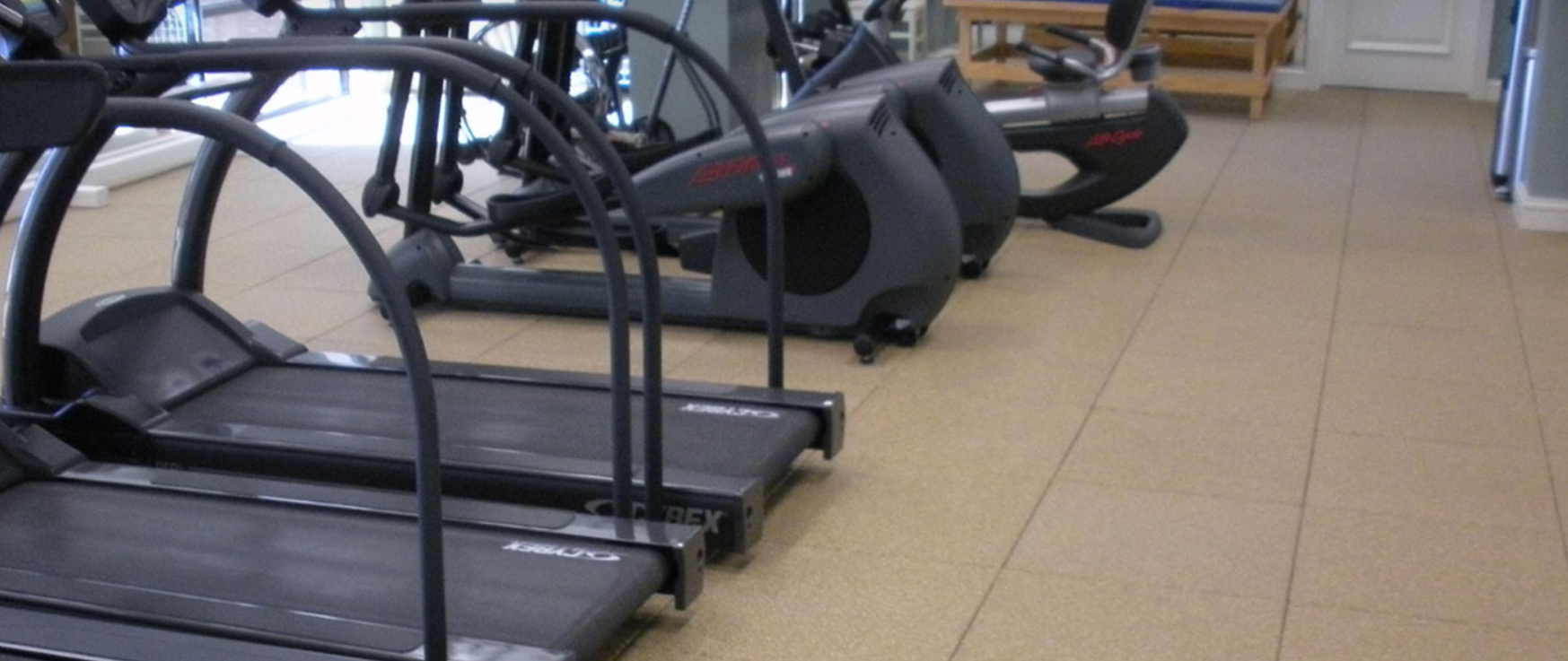
Rubber tiles are widely used in Miami gyms where heavy lifting, impact protection, and noise control are priorities, especially in condos and multi-level buildings.
Performance in High-Impact Areas
- Durability: Thick rubber tiles like SFR Power Tile (2.5″) are built to handle repeated drops from heavy weights without tearing, denting, or shifting
- Secure fit: Interlocking systems keep tiles stable under intense use, even in Olympic lifting zones
- UV resistance: Maintains appearance in areas exposed to sunlight
Shock and Sound Control
- Impact absorption: Dense rubber construction helps protect both equipment and subfloors from damage
- Noise reduction: Reduces vibration and low-frequency sound, making it suitable for residential buildings and upper-floor gyms
Safety and Maintenance
- Slip resistance: Provides strong traction for lifting and functional training
- Fire safety: Non-flammable material adds an extra layer of protection
- Low maintenance: Easy to clean and resistant to moisture, mold, and bacteria
Installation Advantages
- No adhesive required: Interlocking design allows faster installation and easier replacement if needed
- Subfloor protection: Helps prevent damage to concrete slabs from repeated impact
Best Applications
- Free weight areas and Olympic lifting platforms
- CrossFit and functional training zones
- Condominium and hotel fitness centers require noise control
Rubber tiles are typically preferred over rolled flooring in Miami when impact protection and sound isolation are the primary concerns, particularly in facilities with heavy strength training.
Durable, Easy-to-Install Interlocking Gym Flooring for Any Fitness Space
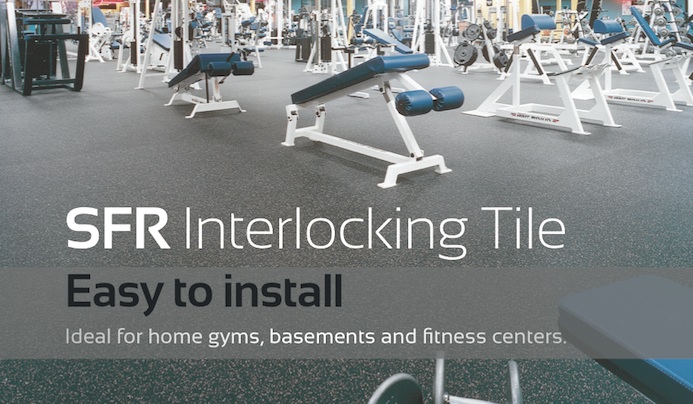
The SFR Interlocking Tile is a durable, do-it-yourself rubber gym flooring solution designed for commercial and home fitness spaces.
- Made in the U.S. from recycled rubber with EPDM color flecks
- No glue required; tiles lock together like a puzzle
- Size: 8mm thick, 23” x 23” tiles
- Easy to install, remove, or relocate
- Strong enough for dropped weights and heavy gym use
- Slip-resistant for safe training in wet or dry conditions
- Precision-cut edges keep tiles tightly connected
- Eco-friendly and cost-effective due to DIY installation
Available in multiple color options to suit different gym designs.
What Factors Influence the Longevity of Rubber Flooring?
The same product can last 5 years or 20 years in Miami, depending on several key variables:
| Factor | Impact on Lifespan |
|---|---|
| Material quality | Higher-density recycled rubber substantially outperforms cheap, low-density options |
| Installation | Proper subfloor prep and moisture barriers prevent the majority of premature failures |
| Usage levels | Heavy loads and high-impact activities shorten lifespan vs. low-impact exercise |
| Maintenance | Consistent cleaning meaningfully extends life; harsh chemicals accelerate breakdown |
| Building conditions | Stable A/C and dehumidification dramatically reduce degradation |
Commercial-grade rubber still requires proper installation to deliver its full potential; even the best product underperforms on a poorly prepared subfloor.
What Are the Signs Your Rubber Flooring Needs Replacement?
Recognizing early warning signs protects your subfloor and prevents injuries:
- Visible surface wear: Cracking, gouging, or excessive flattening in training areas; fading near windows
- Structural changes: Curling edges near entrances; gaps that catch shoes or equipment wheels
- Performance loss: Reduced shock absorption; increased vibration and noise compared to the original installation
- Odor and moisture issues: Persistent musty smell suggesting mold; dark staining at seams
- Safety concerns: Deterioration affecting slip resistance, ADA compliance, or insurer requirements
Schedule a professional inspection when multiple signs appear simultaneously, floors showing several of these warning signs under Miami’s demanding conditions need prompt attention.
How Can You Extend the Life of Rubber Flooring in Miami?
Proactive care in Miami’s climate adds years to your floor’s usable life:
- Daily cleaning: Sweep or vacuum to remove dirt, sand, and grit common in coastal cities
- Proper mopping: Use cool water and neutral pH cleaners; avoid bleach and petroleum-based products
- Humidity control: Run dehumidifiers or continuous A/C, especially June–September; ensure good airflow to prevent moisture buildup
- Protective measures: Use commercial floor mats and entrance mats at entries; add impact tiles under heavy equipment in high-use areas
- Periodic inspections: Check seams, edges, and high-impact zones quarterly; document wear patterns for targeted repairs
Training staff to avoid dragging metal racks or heavy loads directly across the floor prevents gouges and tears.
Why Does Professional Installation Make a Difference?
Miami-specific experience with rubber sports flooring prevents issues that don’t appear until years later.
- Proper adhesives: Professionals select products rated for high moisture and temperature ranges in South Florida
- Subfloor preparation: Testing for moisture vapor emission in concrete slabs, patching, grinding, and applying vapor barriers where needed
- Problem prevention: Avoiding bubbling, tenting, shifting, and misaligned seams through proper acclimation, layout, and edge treatments
- Cost savings: A floor lasting 15 years vs. 8 years significantly lowers annualized cost, critical for busy Miami gyms, hotels, and fitness centers
Choose professionals with a proven track record in local commercial gyms, not just generic residential experience.
How Specialized Fitness Resources Help Maximize Flooring Lifespan
With over 28 years of experience, Specialized Fitness Resources is an industry leader in rubber and sports flooring, CrossFit equipment, and specialty rubber products, serving gyms, schools, training centers, hotels, universities, and municipalities throughout the USA.
- Climate-appropriate recommendations: Specialized Fitness Resources helps choose thickness, density, and product type (rolls, tiles, interlocking) tailored to Miami’s humidity and your facility’s specific use pattern.
- Professional installation services: Site assessment, moisture testing, layout planning, and experienced installers familiar with local building conditions and proper edge treatments for seamless finishes.
- Maintenance guidance: Cleaning protocols, proprietary sanitizing products, and inspection intervals specific to each facility type.
- Problem prevention: Proper design and installation reduce mold, odors, edge curling, and subfloor damage common in poorly specified projects.
Specialized Fitness Resources’ client experience spans major national gym chains, luxury hotels, cruise lines, universities, CrossFit boxes, and residential projects, from South Florida and across the USA, delivering flooring solutions built to perform in even the most demanding environments.
Also Read: Miami Gym Owners’ Guide: How Do Martial Arts Mats Differ from Yoga or Pilates Rubber Flooring?
Ready to Maximize the Life of Your Gym Flooring in Miami?
Whether you’re building a new facility or refreshing an existing space, the right flooring decisions made today determine your costs for the next decade.
Contact Specialized Fitness Resources for an on-site assessment of your current or planned gym space. Request a quote for rubber rolls, tiles, interlocking systems, and impact platforms rated for Miami conditions. Discuss maintenance plans and replacement strategies to ensure consistent safety and performance.
Frequently Asked Questions
Does rubber flooring melt or get sticky in Miami’s heat?
Quality vulcanized rubber gym flooring won’t melt or become tacky; it’s engineered to remain stable in warm environments, including non-air-conditioned garages and warehouse gyms. What you may notice in extreme heat is minor expansion, which is normal for rubber. Low-grade, non-vulcanized products are more susceptible to this. Choosing commercial-grade vulcanized rubber and allowing proper expansion gaps at installation eliminates the issue.
Can rubber gym flooring handle occasional flooding or storm-related leaks?
Vulcanized rubber is non-porous and waterproof, so brief surface water exposure is generally not a problem if dried promptly. The real risk is repeated or standing water seeping through seams into the subfloor. This can lead to mold growth and adhesive failure over time. After any significant flooding, lift affected sections, dry the subfloor thoroughly, and inspect before reinstalling.
Will heavy cardio machines and racks permanently dent rubber flooring?
Some compression under treadmills, racks, and bikes is expected, especially with thinner tiles. It’s not a defect; it’s a normal characteristic of rubber under sustained load. Using thicker tiles (3/4″ or more) or dedicated equipment mats in high-load zones significantly reduces permanent indentation and protects the subfloor underneath.
How often should rubber flooring be deep-cleaned in a busy Miami gym?
Daily dry sweeping or vacuuming is essential in any commercial facility. Wet mopping with a pH-neutral cleaner should be done several times per week in high-traffic gyms. Deep cleaning, using a machine scrubber or concentrated pH-neutral solution, is recommended quarterly as a baseline, with higher-traffic facilities doing it monthly. Always ensure the floor dries completely after wet cleaning to prevent slippery residue and odor buildup.