
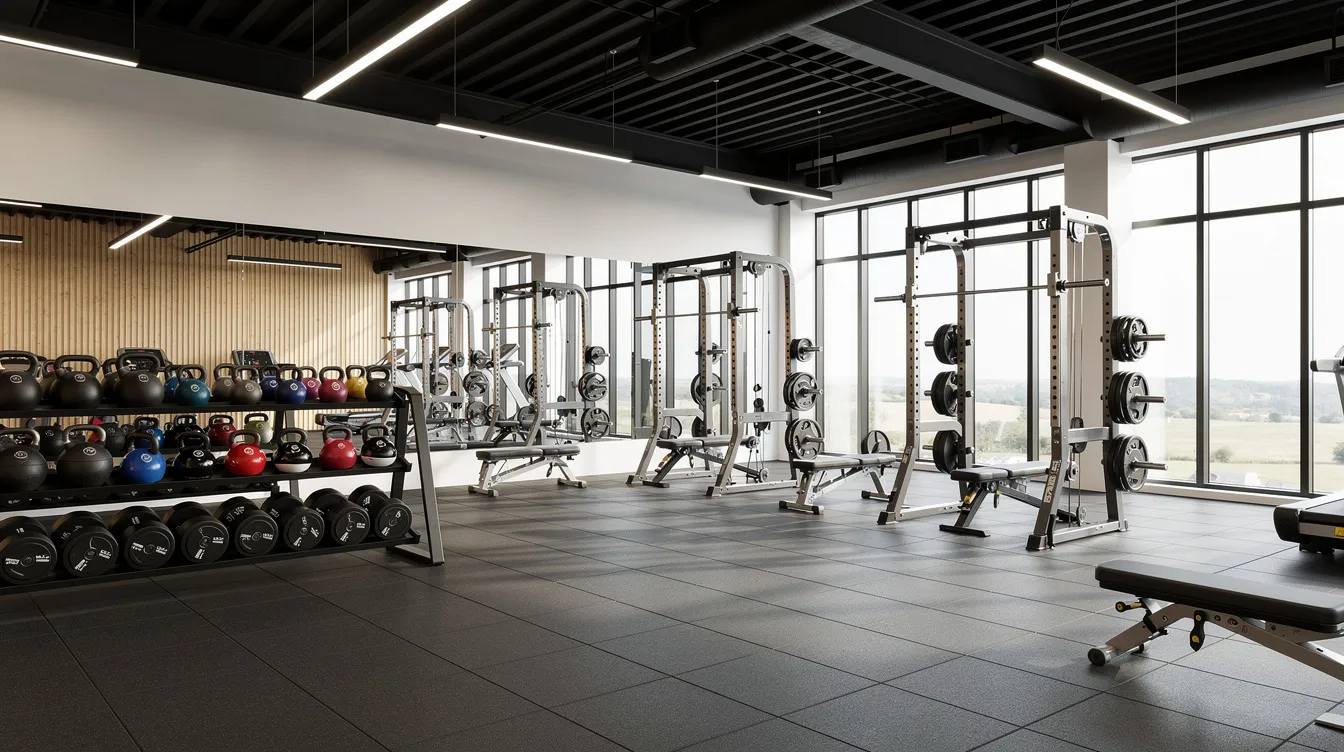
Flooring in a fitness facility is a critical performance and safety surface, not just a finish applied to concrete. In Miami, FL, aerobic studios and CrossFit boxes often occupy mixed-use buildings where floor impact, sound, and vibration directly affect neighbors and building management. Using the wrong floor, such as hard tile under dance cardio or thin rubber under Olympic lifting, leads to member injuries, noise complaints from adjacent tenants, and the need for early replacement that eats into your budget.
This article compares ideal rubber flooring options for aerobic studios and CrossFit boxes and outlines key considerations affecting material selection, installation methods, and long-term performance. Whether you are planning a boutique Zumba studio or a functional training warehouse, understanding these differences helps you make the right investment from the start.
At Specialized Fitness Resources, we offer over 28 years of experience providing durable, eco-friendly gym flooring options designed to meet the unique demands of every type of fitness facility. From weight rooms and aerobic studios to locker rooms, horse stall mats, and childcare areas, our extensive selection ensures you find the perfect solution for your space.
Contact us today at 305-752-0451 to request a quote and explore flooring options that enhance performance, reduce injury risk, and elevate the look of your Miami fitness center. Let us help you create a facility your members will love.
Also Read: How Can Upstairs Fitness Centers in Miami Minimize Sound and Vibration with the Right Flooring?
Understanding the Demands of Aerobic Studios
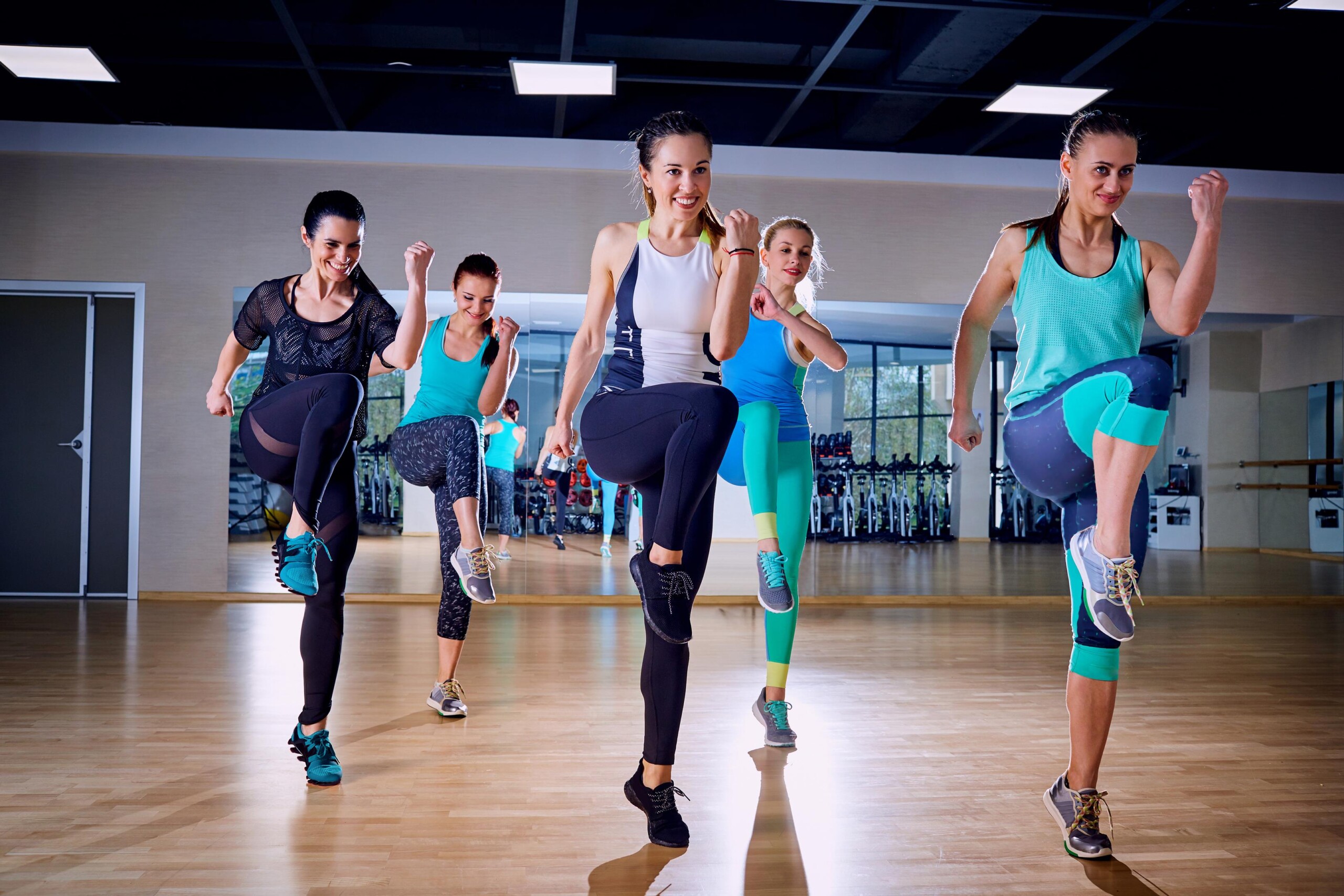
An “aerobic studio” in Miami typically hosts Zumba, dance cardio, barre, step aerobics, Les Mills classes, and HIIT sessions with light dumbbells and resistance bands. These spaces commonly appear in high-rises, hotels, and residential amenity areas, where sound and vibration control is crucial to maintaining good relationships with building management and neighboring tenants.
Sessions often run back-to-back from early morning to late evening, which increases wear, sweat exposure, and cleaning demands on the floor surface. The subfloor in these spaces is typically concrete or existing tile over post-tension slabs, which affects the required underlayment and moisture protection before installation begins.
How Aerobic Studios in Miami Are Used
Movement patterns in aerobic studios include high-repetition steps, lateral shuffles, jumps, quick pivots, and dance turns that place unique demands on the flooring. Instructors and members execute these movements dozens or even hundreds of times per class.
Common class types in South Florida include:
- Zumba and salsa-based cardio
- Hip-hop and dance fitness
- Step aerobics with platforms
- Body pump with light bars and dumbbells
- Bootcamp-style HIIT without heavy barbells
Joint stress concerns are significant for regular members who attend multiple classes per week and for instructors who teach several sessions daily. Overly “grippy” floors, such as basic ceramic tile or low-quality laminate, can twist knees and ankles during turns and directional changes, creating injury liability for studio owners.
Bare concrete with a thin mat is not acceptable for a commercial aerobic studio. The lack of impact absorption causes discomfort during class, accelerates fatigue, and exposes the facility to liability issues when members experience joint pain or injury.
Also Read: Miami Gym Owners’ Guide: How Do Martial Arts Mats Differ from Yoga or Pilates Rubber Flooring?
What Are the Key Flooring Performance Requirements for Aerobic Studios?
Shock Absorption and Impact Reduction
A resilient flooring system should reduce vertical impact on the knees, hips, and ankles while remaining responsive underfoot. Superior shock absorption protects participants during high-repetition movements and keeps instructors healthy through multiple daily classes. The flooring should absorb energy on landing but return enough to support dynamic routines without feeling “dead” or overly soft.
Slip Resistance Without Excessive Grip
The surface must allow controlled spins and lateral movements without sudden sticking or sliding, even when the floor is damp with sweat. A non-slip surface that still permits pivoting is essential for dance-based fitness. Too much grip increases the risk of knee and ankle injuries during turns, while too little traction causes dangerous slips.
Acoustic Control
Studios in Miami condos and hotels must comply with HOA or brand noise expectations. Impact Insulation Class (IIC) ratings of 50 or higher are often required by building codes for floor-ceiling assemblies in multi-family structures. Acoustic rubber underlayments help reduce thumps and footfall noise, preventing complaints from neighbors below and keeping building management satisfied.
Also Read: Sound Absorption in Aerobic Studios: Why the Right Flooring Makes a Quieter Class
Aesthetics and Branding
Clean, seamless looks in neutral or branded colors photograph well for social media marketing and create a professional atmosphere. Options like speckled rubber or wood-look surfaces help studios establish a consistent visual identity. Uniform finishes also make it easier to add floor markings, logos, and designated zones.
What Are the Best Flooring Systems for Miami Aerobic Studios?
Miami aerobic studios need flooring that absorbs impact, handles constant foot traffic, resists humidity, and looks the part. Specialized Fitness Resources offers four systems built for exactly that.
Aerobics TileVinyl
A snap-together modular system that delivers the look of wood without the cost. No adhesives, no special tools, and self-installable. The optional 3mm rubber underlayment absorbs shock and reduces joint stress, ideal for cardio, spinning, and dance studios across Miami-Dade. Low maintenance, never needs refinishing.
Aerobic Tiles
The most cost-effective option in the SFR aerobics flooring lineup. Each 12″ × 12″ × 3/4″ recycled PVC tile features over 250 raised discs with built-in air support, performing like a floating hardwood floor at a fraction of the price. Forgiving on ankles, joints, and lumbar. Available in seven colors for custom-branded floor designs. UV-stable in South Florida’s climate.
WoodVinyl
Natural wood aesthetics with synthetic sport performance. Bacteria- and fungus-treated, no underlayment required, and no sanding or refinishing, ever. DIN V18-032-2 certified. The right choice for boutique studios in Miami Beach or Wynwood, where presentation and performance both matter.
Floating Wood Flooring
SFR’s premium aerobics solution. Pre-finished real hardwood over an integrated pre-sprung subfloor, installed directly over concrete with zero adhesives, screws, or nails. Transportable, built-in force reduction, and ideal for high-volume aerobics and dance studios where instructor joint health is a priority.
Also Read: What Are Good Flooring Solutions for Garage Gyms in Hot, Humid Climates Like Florida?
What Flooring Choices Should You Avoid in an Aerobic Studio?
Choosing the wrong flooring for an aerobic studio is a costly mistake, both financially and physically. Here are the most common missteps Miami studio owners make.
Bare Concrete
Hard, unforgiving, and unacceptable for any movement-based class. Zero shock absorption means direct joint stress on every landing, a liability risk for members, and a long-term injury risk for instructors.
Standard Carpet
Traps moisture, harbors bacteria, and creates dangerous friction for lateral movement. In Miami’s humidity, carpet in an aerobic studio is a maintenance and hygiene problem from day one.
Thin Rubber Gym Mats Not Designed for Aerobics
General-purpose rubber mats lack the resilience and surface response that aerobic formats demand. They compress over time, offer inconsistent footing, and provide none of the subfloor-like cushioning that purpose-built aerobic tiles deliver.
Hardwood Without a Sprung Subfloor
Unsprung hardwood looks premium but performs poorly for high-repetition aerobic movement. Without force reduction underneath, it transmits impact directly to joints, defeating the purpose of a quality floor entirely.
Glossy or Overly Smooth Finishes
High-gloss surfaces become dangerously slippery the moment sweat hits the floor. Any aerobic studio surface must balance grip and glide, enough traction to prevent slipping, and enough smoothness to allow pivoting.
Also Read: Remodeling Your Gym? Don’t Overlook the Floor – Here’s Why It’s a Game Changer!
Understanding the Demands of CrossFit Boxes
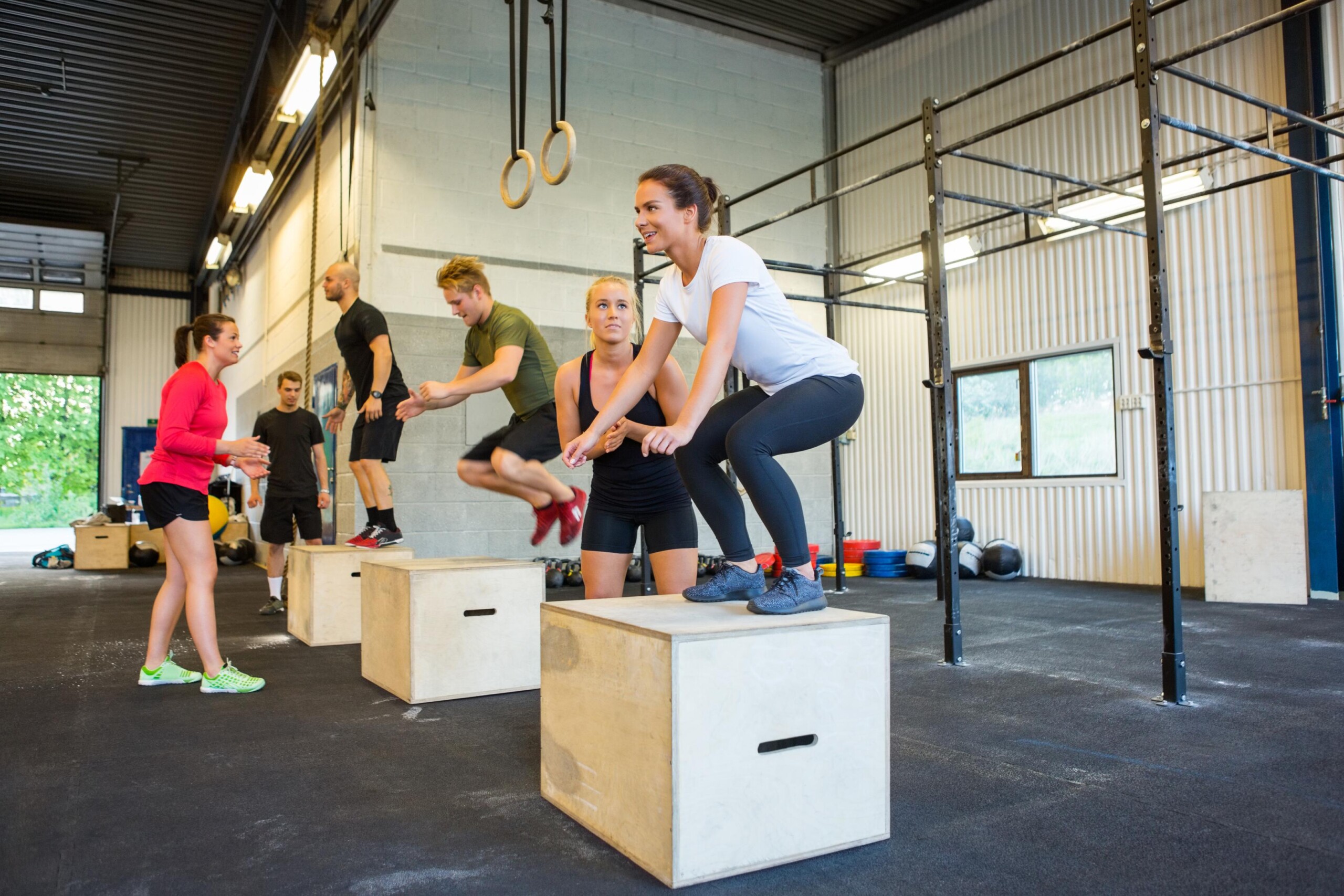
CrossFit and functional training boxes in Miami are subject to extreme impacts and lateral shear that aerobic studios never experience. Typical activities include Olympic lifts with overhead drops, sled drags, wall balls, kettlebell swings, box jumps, and gymnastic movements on rigs.
Many spaces are converted warehouses with concrete slabs that must be protected from cracking and surface spalling. Some Miami CrossFit affiliates operate directly below residential or office space, making noise and vibration control a frequent landlord concern and lease requirement.
What Happens on CrossFit Flooring
The stressors on CrossFit rubber flooring are substantially different from aerobic environments:
- Dropped bumper plates from overhead during snatches and clean-and-jerks
- Repeated deadlifts with heavy weights, hitting the ground
- Heavy dumbbells and kettlebells contacting the surface during swings and carries
- Prowler sled pushes and pulls creating high lateral friction across the surface
- Box jumps landing with full bodyweight repeatedly on the same spots
- Double-unders, burpees, and handstand push-ups requiring dependable traction and stability
Group classes with 10–30 athletes amplify wear patterns and require consistent floor performance across the entire box. When the whole class performs deadlifts simultaneously, the cumulative impact on both the flooring and the subfloor underneath is enormous.
Also Read: What’s the Best Gym Flooring Thickness for Home and Commercial Gyms in Miami? Find Out Here!
What Are the Key Flooring Performance Requirements for CrossFit Boxes?
Extreme Durability
CrossFit flooring must survive tens of thousands of barbell drops per year without tearing, mushrooming at tile edges, or permanently denting. Extremely durable, high-density rubber resists the repeated compression that would destroy lighter-duty products within months.
Impact Resistance and Subfloor Protection
Thick, high-density rubber, typically 1.5 inches to 2.5 inches for dedicated lifting areas, disperses impact and protects the concrete slab from dropped weights. This protection is especially important in leased commercial facilities with damage clauses. The right flooring prevents concrete spalling and cracking that could cost thousands to repair when vacating a space.
Traction and Stability
The surface must be firm enough for squats, deadlifts, and Olympic lifts with no spongy feel under loaded barbells. Athletes need a stable surface to maintain proper form during heavy lifting. Compression under load creates instability that increases injury risk and undermines lifting performance.
Noise and Vibration Control
Heavy lifting and dropped weights transmit through the building structure, generating both impact sound and low-frequency vibration. Thicker tiles and acoustic underlayments reduce complaints from neighboring tenants in mixed-use buildings, a practical reality for many CrossFit gyms operating in Miami’s commercial and retail corridors. Sound dampening becomes essential when a box shares a building with offices, retail, or residential spaces.
Recommended Flooring Systems for CrossFit Boxes
CrossFit boxes in Miami demand flooring that can absorb daily barbell drops, support heavy lifting, handle high-intensity movement, and hold up in South Florida’s heat and humidity. Specialized Fitness Resources supplies purpose-built systems for every zone inside a CrossFit facility.
Basic Rubber Flooring Rolls & Tiles – General Training Zones
For open training floors handling kettlebells, dumbbells, cardio equipment, and bodyweight work, Basic rubber rolls and tiles in 6mm, 8mm, and 9mm provide durable, shock-absorbent coverage. Available in 4-foot wide rubber rolls or 23″×23″ and 24″×24″ interlocking tiles, they install quickly, maintain easily, and come in a wide range of colors for branded gym designs. The interlocking tile format allows fast reconfiguration, a practical advantage for CrossFit boxes that regularly rearrange their floor layout.
Smash Tile – Heavy Drop Zones
For squat racks, Olympic platforms, and any zone where barbells meet the floor repeatedly, the Smash Tile is the definitive solution. At 2.5 inches thick, this molded tile is engineered specifically for extreme durability and ultimate sound and shock absorption in free weight and strength equipment areas. It protects the concrete slab from spalling and cracking, critical for CrossFit boxes operating in leased Miami-Dade commercial spaces with damage clauses, while keeping noise transmission to neighboring tenants to a minimum.
SFR CrossTurf – Sled and Functional Training Lanes
Dedicated turf lanes for sled pushes, agility drills, and functional movement are a defining feature of any well-equipped CrossFit box. SFR CrossTurf delivers a consistent artificial turf surface purpose-built for multi-use athletic performance, including sled training. It minimizes abrasions and joint injuries compared to harder surfaces, contributes to less time lost to injury, and increases revenue potential for facilities running mixed programming throughout the day.
Aerobic Studios vs. CrossFit Boxes: Side-by-Side Flooring Comparison
Planning a Miami fitness facility or a mixed-use space with both an aerobic studio and a CrossFit box under one roof starts with understanding that these two environments have fundamentally different flooring demands. Here is how they compare across every key specification.
| Aerobic Studio | CrossFit Box | |
|---|---|---|
| Primary Demand | Shock absorption and comfort for high-repetition movement | Extreme durability and impact resistance for dropped weights and heavy equipment |
| Ideal Thickness | 3/4″ modular PVC or vinyl tile with optional 3mm rubber underlayment | 6mm–9mm rubber for general zones; 2.5-inch molded rubber tile for drop zones |
| Surface Feel | Slightly springy; allows easy pivots during dance and cardio formats | Firm, stable, and grippy under lifting shoes; zero compression under load |
| Typical Materials | Modular PVC tiles, vinyl tile systems, WoodVinyl, or sprung wood flooring | High-density rubber gym tiles across zones; artificial turf lanes for sled and functional training |
| Acoustic Priority | Reducing footfall noise from continuous stepping and jumping | Managing deep impact vibrations from dropped barbells and bumper plates |
| Key SFR Products | Aerobic Tiles, Aerobics TileVinyl, WoodVinyl, Floating Wood Flooring | Everlast Basic Rolls & Tiles, Everlast Smash Tile, SFR CrossTurf |
The differences are not superficial. Specifying an aerobics system in a CrossFit box leaves the concrete slab unprotected and puts athletes at risk. Specifying a CrossFit rubber system in an aerobics studio creates a surface that is too firm and unforgiving for the joint demands of high-repetition cardio formats. Getting the right product in the right zone is the foundation of a facility that performs well and lasts.
Why Professional Installation Matters for High-Performance Gym Flooring
Even high-quality rubber, athletic, or aerobic flooring systems can fail prematurely when subfloor preparation or installation is improperly performed. Professional installation is essential to ensure durability, safety, and long-term performance, particularly in humid climates such as Florida, where moisture and temperature fluctuations directly affect flooring behavior.
Subfloor Preparation
Proper subfloor preparation is one of the most critical stages of any gym flooring installation. Before flooring materials are installed, existing concrete substrates must be carefully evaluated and prepared through:
- Surface leveling and grinding where required
- Crack and joint repair
- Moisture testing and vapor emission assessment
- Removal of contaminants such as adhesives, oils, or sealers
Older warehouse conversions common in Miami may contain uneven or damaged slabs, while newly poured concrete can continue releasing moisture during the curing process. Industry best practices typically require floor flatness within 3/16 inch over 10 feet for resilient athletic flooring, although manufacturer specifications should always govern final tolerances.
Professional preparation identifies moisture conditions early and allows for mitigation systems when necessary, preventing adhesive failure, bubbling, or flooring separation later.
Seam Treatment and Edge Detailing
Precise seam construction and edge finishing are essential for both safety and appearance in commercial fitness environments. Proper installation includes:
- Tight, accurately aligned seams
- Clean transitions between flooring types
- Secure thresholds at entryways and equipment zones
- Edge protection in high-traffic areas
Poorly executed seams can create trip hazards, permit moisture intrusion beneath flooring, and accelerate edge wear. High-traffic gym environments demand installation precision that is difficult to achieve without specialized tools and experience.
Adhesives, Installation Methods, and Underlayment
Selecting the correct installation system is critical and depends on both the flooring material and building conditions.
Professional installers evaluate whether flooring should be:
- Fully adhered using moisture-resistant adhesives
- Loose-laid or perimeter secured
- Installed with interlocking systems
- Paired with acoustic or shock-absorbing underlayment
In humid regions like Florida, adhesives must be compatible with elevated moisture levels and concrete vapor emissions. Incorrect adhesive selection is a common cause of flooring failure. Additionally, acoustic underlayments may be required in condominiums, hotels, or multi-story facilities to reduce impact noise and vibration transmission.
Warranty Protection and Accountability
Working with a single provider responsible for both materials and installation helps preserve manufacturer warranties and simplifies project accountability. When flooring products and installation services are sourced separately, responsibility for performance issues may become disputed between parties.
A unified installation approach provides:
- Clear warranty coverage
- Consistent installation standards
- Coordinated project management
- A single point of contact for future service or support
For commercial fitness facilities, this integrated responsibility reduces long-term risk and ensures flooring systems perform as intended throughout their lifecycle.
Also Read: Foam vs Rubber: Which Flooring is Best for Your Home Gym in Miami?
What Are Eco-Friendly and Low-VOC Flooring Options for Gym Flooring?
Demand for sustainable fitness flooring solutions continues to grow across Florida, particularly in schools, universities, municipal recreation centers, and wellness-focused private gyms where environmental responsibility and indoor air quality are key considerations.
Recycled Rubber Products
Many commercial gym flooring systems are manufactured using recycled rubber derived primarily from post-consumer vehicle tires and industrial rubber scrap. When properly engineered to appropriate density, thickness, and binder composition, recycled rubber flooring provides durable performance suitable for aerobic studios, weight rooms, and functional training environments such as CrossFit facilities.
In addition to durability, recycled rubber flooring contributes to waste reduction by diverting materials from landfills. High-quality recycled rubber products are designed to meet performance requirements for:
- Impact absorption
- Slip resistance
- Load-bearing under heavy equipment
- Resistance to wear in high-traffic commercial settings
When manufactured to established performance standards, recycled materials can perform comparably to virgin rubber products in many commercial applications.
Low-VOC Adhesives and Materials
Odor and off-gassing from newly installed flooring systems can be a concern, particularly in enclosed studios, multi-story residential amenity gyms, or facilities with limited ventilation. Modern flooring systems increasingly utilize low-VOC (volatile organic compound) adhesives, binders, and installation materials to help minimize indoor air contaminants during and after installation.
Low-VOC products support improved indoor air quality for members and staff and may contribute toward green building certifications or institutional environmental standards. This consideration is especially relevant for:
- Boutique fitness studios
- Condominium fitness centers
- Schools and childcare facilities
- Home gyms in garages or basement conversions with restricted airflow
It is important to note that some natural rubber odor may still be present initially, even with low-VOC products, but typically dissipates as ventilation and curing progress.
Longevity as a Sustainability Strategy
Sustainability is not defined solely by recycled content. Durability and lifecycle performance play a major role in environmental impact. Selecting a properly specified flooring system that performs for 10 to 15 years or longer, depending on usage and maintenance, reduces material consumption, transportation impact, and landfill waste compared to systems requiring frequent replacement.
Premature flooring failure increases environmental impact through repeated manufacturing, removal, and disposal cycles. Long service life is therefore a critical component of sustainable facility design.
Certifications and Compliance Requirements
Many Florida school districts, universities, and public-sector projects require documentation verifying environmental performance. Common requirements may include:
- Recycled content disclosure
- Low-VOC emissions certification
- Indoor air quality compliance documentation
Requesting environmental certifications and product data sheets from flooring providers early in the project helps ensure compliance with institutional standards and avoids approval delays during procurement.
Also Read: Can You Install Rubber Gym Flooring Over Carpet? Expert Tips and Complete Guide
Upgrade Your Miami Fitness Facility with the Best Gym Flooring Options
Ready to upgrade your Miami fitness facility with flooring built for performance and safety? Specialized Fitness Resources has vast experience providing commercial-grade solutions for aerobic studios, CrossFit boxes, and mixed-use gyms. From high-impact rubber tiles to eco-friendly aerobics floors and acoustic underlayments, we deliver durable, stylish, and safe surfaces tailored to your needs. Contact us today to request a quote and ensure your facility performs at its best.
Frequently Asked Questions
How thick should the flooring be if my Miami facility has both group cardio and some light lifting?
Use 8mm–9mm rubber over a 5mm cushion or acoustic underlayment for mixed cardio and light weights. For barbell drops, create a dedicated 2.5-inch molded rubber tile zone.
Can I install gym flooring directly over old tile or laminate in a Miami condo building?
Yes, if the surface is flat, secure, and clean. Correct loose tiles, high spots, or grout failures, and verify condo rules for underlayment and noise standards.
Is it possible to reduce barbell drop noise enough for upstairs or mixed-use CrossFit spaces?
Yes, with 2.5-inch rubber drop zones, acoustic underlayments, and designated lifting areas. Combine with operational rules to further reduce transmitted vibration.