
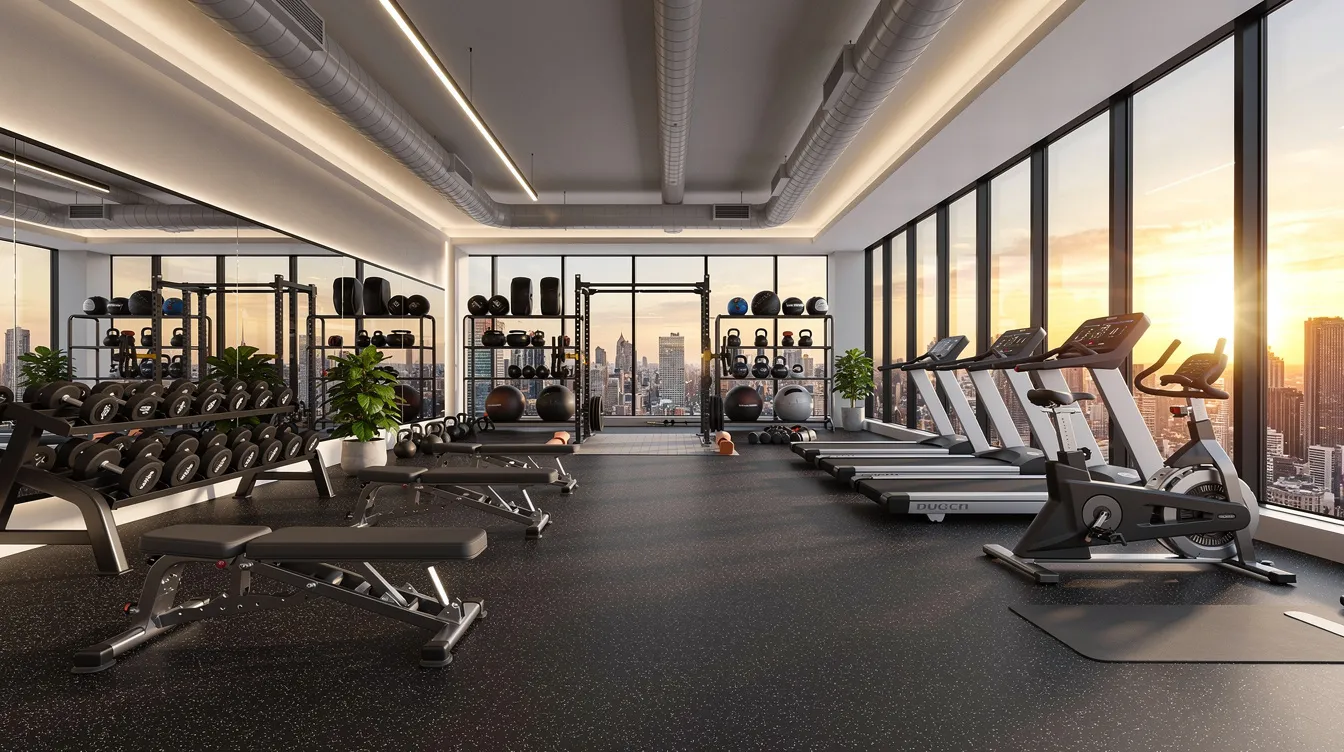
New towers delivered across Brickell, Edgewater, Sunny Isles Beach, and Miami Beach between 2023 and 2026 advertise spa-level fitness centers to sell units and justify premium HOA fees. Luxury fitness centers in Miami require a blend of high-end design and technology to meet the expectations of discerning residents. A high-performance fitness center serves as a wellness destination, not just a room with machines.
Many developers initially focus on high-end equipment brands like Technogym or Life Fitness, only to discover that equipment alone does not create a true performance facility. Commercial gym flooring is the hidden backbone of the space. It protects the structure, controls noise for units above and below, sets the visual tone, and keeps residents safer.
This guide covers why high-performance fitness centers matter in Miami luxury communities, why flooring is foundational, how to design each zone, Miami-specific challenges, and how to select the right flooring partner.
Key Takeaways
- Luxury condominium buyers in Miami increasingly expect a resort-style fitness center, making premium gym flooring an essential part of creating a strong first impression.
- Commercial gym flooring enhances safety, reduces noise, protects subfloors, and improves the overall appearance and functionality of fitness spaces.
- Different workout areas, including strength zones, cardio spaces, turf areas, yoga studios, and locker rooms, require flooring designed for their specific performance needs.
- Miami’s humid, coastal environment makes professional flooring installation critical to prevent moisture issues, seam separation, odors, and premature wear.
- High-quality commercial rubber flooring can provide 15 to 20 years of reliable performance when properly selected and installed.
- Investing in durable flooring helps reduce long-term maintenance costs, minimizes disruptions, and increases resident satisfaction.
- Partnering with an experienced Miami commercial gym flooring provider such as Specialized Fitness Resources ensures a fitness center that supports property value and delivers lasting performance.
Build a Fitness Center That Adds Lasting Value
The right flooring system is the foundation of every successful fitness center. Specialized Fitness Resources helps Miami luxury communities create safe, durable, and visually impressive wellness spaces with premium commercial gym flooring designed for long-term performance. Contact us today at (305) 752-0451 to discuss your project and request a quote.
Contact Us Now
Why High-End Fitness Centers Are Essential in Miami Luxury Communities
Resort-style amenities have become standard in developments along Biscayne Bay and the Miami River since 2020. Amenity spaces in new luxury projects have roughly doubled in size since that time, with some buildings now offering more than 50,000 square feet of wellness, fitness, and social space. The global wellness real estate market grew from $225.2 billion in 2019 to $438.2 billion in 2023, confirming that fitness and wellness amenities drive real purchasing decisions.
Residents today expect:
- 24/7 access to a fully equipped gym
- Design and finishes on par with South Beach hotels
- Spaces for strength, cardio, classes, recovery, and outdoor workouts
High-traffic gyms in these buildings see hundreds of check-ins daily, and residents increasingly expect recovery amenities, privacy for high-profile individuals, and a level of polish previously reserved for five-star hotels.
A premium fitness center differentiates a building in crowded submarkets, often increasing perceived property value and leasing velocity. For developers, the benefit is a stronger marketing story and the ability to command a higher price per square foot. For HOAs and property managers, correctly built fitness spaces mean higher resident satisfaction, better retention, and fewer complaints about noise and vibration.
Compare a bare-bones, echoey gym with hard tile floors to a rubber-floored, acoustically treated fitness center where residents can lift and run without disturbing neighbors. The difference is immediately obvious to every prospective buyer who walks through the door. The single most overlooked factor in turning a basic gym into a high-performance, luxury-level fitness center is the flooring system under every piece of equipment.
Also Read: How Do You Match Flooring Materials to Your Gym’s Brand Identity in Miami, Florida?
Why Commercial Gym Flooring Is the Foundation of a High-Performance Condo Gym
In multi-story Miami condominiums, flooring is not just a finish material. It is a performance system that interacts with concrete subfloor surfaces, HVAC, and resident comfort. Flooring reflects gym identity and member experience in ways that go far beyond appearance.
Commercial rubber flooring and turf serve specific performance roles:
- Supports and stabilizes heavy commercial equipment like plate-loaded racks, cable systems, and treadmills
- Protects expensive concrete subfloors from impact damage and micro-cracking caused by dropped dumbbells and plates
- Improves resident safety with better traction, slip resistance, and shock absorption to reduce joint stress and falls
The acoustic role is crucial. Thick rubber flooring plus acoustic underlayment significantly reduce impact noise and vibration felt in units directly below weight rooms and cardio decks. Without proper treatment, even routine treadmill use creates low-frequency vibration that travels through the building structure.
Flooring also keeps the gym looking luxurious over the years by hiding scuffs and wear in high-traffic paths, keeping seams tight and clean, and maintaining color under strong Miami daylight and LED lighting. Different colors and textures define workout zones: dark speckled rubber for strength training, green turf lanes for functional training, and muted tones for yoga and stretching.
Custom-branded flooring enhances brand recognition and cohesion. Floor colors must align with brand identity and facility design, and flooring should match the training environment and brand promise. High-performing layouts prioritize placing high-demand equipment to reduce congestion throughout the space.
A clear best-practice note: flooring selection, thickness, and installation methods should be finalized before ordering and anchoring equipment. This step avoids costly cutting, rework, and performance issues down the line.
Also Read: From Barns to Gyms: The Utility of Horse Stall Mats in Various Settings
How Can Each Workout Area Be Designed With the Right Flooring Solution?
Most Miami luxury community gyms today are multi-zone spaces, and each area has different flooring requirements. Fitness centers should include storage designed for multi-purpose programming so that equipment can be moved efficiently between uses.
Strength Training Areas: Rubber Flooring for Heavy Use
Free-weight zones, squat racks, and plate-loaded machines need dense commercial gym flooring. Rubber flooring is ideal for strength training zones, and thicker options are recommended for heavy lifting areas, typically 8 mm rolled rubber for moderate loads and thicker interlocking tiles for Olympic lifting spaces. Specialized Fitness Resources’ SFR Power Tile, built on a tool-free Blok locking system, is designed specifically for this kind of repeated heavy impact, resisting dimpling and tearing under dropped weights.
Impact absorption matters here. Thicker rubber absorbs force from heavy weights like 30- to 50-pound dumbbells and bumper plates, protecting both the concrete slab and the equipment. Continuous rubber rolls under racks and rigs prevent rocking and keep anchor points secure, which is essential in tower gyms from Brickell to Aventura.
Safety improves with better traction for lifters moving with loaded barbells or kettlebells, even in humid conditions. Dark, speckled commercial rubber flooring disguises chalk, rubber dust, and everyday wear while coordinating with the building’s interior design palette. The look should be clean and unified, with minimal seams, no overlapping mats, and a visually distinct power zone inside the gym.
Cardio Equipment Zones: Controlling Noise and Vibration
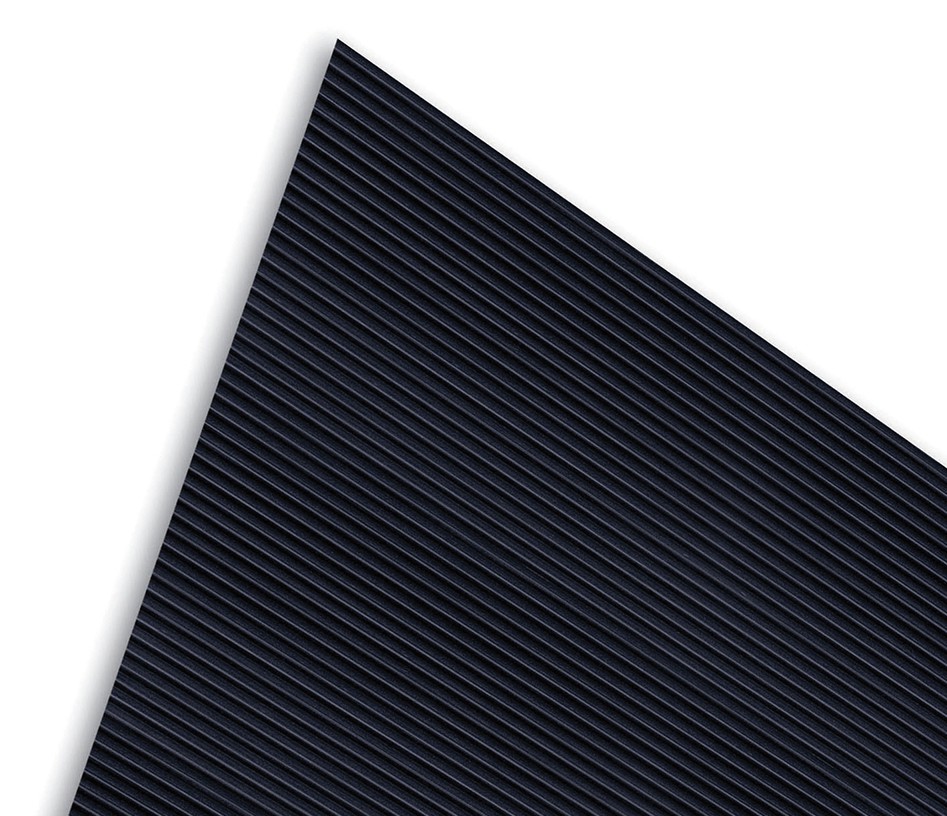 Treadmills, rowers, ellipticals, and stair climbers in Miami towers create constant impact noise and vibration that travels through the building structure if the flooring is inadequate. Acoustical flooring systems improve comfort in wellness spaces and are recommended wherever cardio equipment sits above residential units. Specialized Fitness Resources’ Equipment Mats, made from a recycled rubber and plastic compound, are built for placement directly under treadmills, cross-trainers, and stationary bikes, cutting noise and protecting both the floor and the machine’s moving parts.
Where noise transfer to the floors below is a bigger concern, an acoustic underlayment like SFR Sound Insulation can go beneath the finish flooring to further isolate impact sound before it travels into the building structure. These surfaces resist indentation from machine feet and rolling loads over many years.
Functional Training & Turf Lanes: Performance and Design Impact
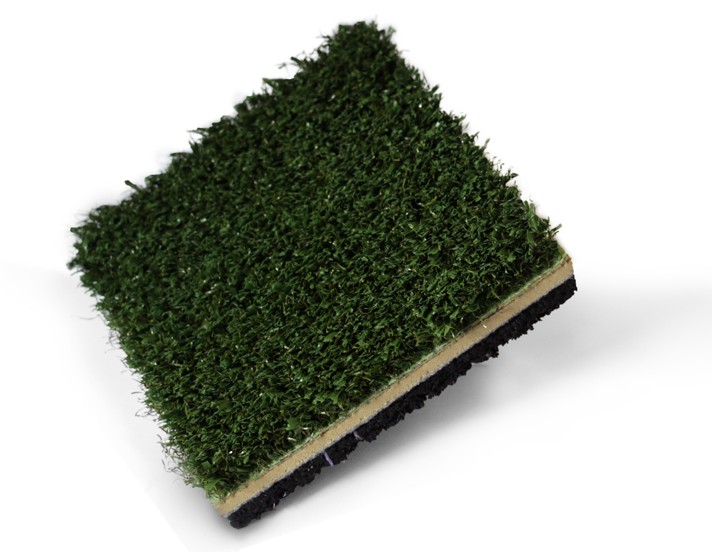 Many 2024 to 2026 Miami luxury buildings now include indoor turf lanes for sled pushes, agility ladders, CrossFit-style drills, and bodyweight training, often 6 to 8 feet wide and 30 to 60 feet long. Specialized Fitness Resources’ Training Ground line, built with Nike Grind material recovered from recycled athletic shoes, is designed for exactly this kind of repeated, high-impact functional work without premature wear.
Turf areas still rely on the right subfloor preparation and installation methods to prevent rippling, trip hazards, and seam separation under heavy, repeated sled pushes. Turf lanes can integrate custom hash marks, numbers, or building logos, giving the fitness center a high-end training-center feel that photographs well for marketing brochures and the building’s website.
Yoga, Stretching, and Mind-Body Spaces: Comfort and Calm
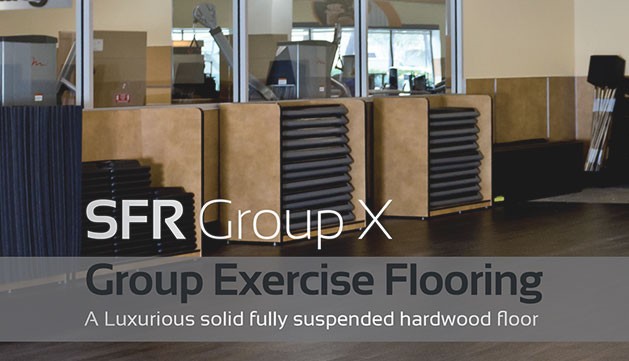
Miami luxury residents expect quiet, calming rooms for yoga, Pilates, and stretching, often with floor-to-ceiling glass and soft lighting. Luxury clients generally appreciate spacious layouts that avoid overcrowding, making room planning just as important as materials selection.
For the room itself, Specialized Fitness Resources’ SFR Group X, a real hardwood surface with an integrated foam subfloor that clicks together without adhesives or fasteners, gives yoga and Pilates studios a warmer, more residential feel while still cushioning joints during floor work. Individual class mats round out the space, and cleaning and durability matter here since these rooms host small group classes and private sessions frequently.
Aesthetics lean toward muted, neutral colors, charcoal, warm gray, or light sand tones that connect to spa and pool areas. Avoid harsh patterns used in high-energy spaces; comfort, acoustics, and visual tranquility are the design goals.
How Can Flooring Design Features Create a True Luxury Fitness Experience?
Residents comparing buildings in 2025–2026 notice details: how the floor looks, how sound carries, and whether the gym feels like a resort or a retrofit storage room. Hospitality-level interior design is expected in luxury fitness centers, and the floor sets the foundation for that impression.
Flooring contributes to luxury-level aesthetics through:
- Coordinated color schemes across cardio, strength, and studio zones
- Modern, matte finishes rather than glossy, slippery surfaces
- Seamless transitions at doorways, mirrors, and glass partitions
Branding opportunities include inlaid community logos at the fitness entry, subtle lane markings, and accent colors that echo the building’s lobby design. Commercial rubber flooring and turf can complement upscale interior architecture, wood veneer wall panels, custom lighting, and high-end millwork commonly found in Miami’s luxury towers.
Choosing aesthetics over durability can lead to stains and premature wear. Overusing multiple flooring types can weaken brand cohesion, and mismatched materials can negatively affect user experience. The overall effect should feel clean and uncluttered with consistent flooring lines, warm and inviting rather than industrial, and Instagram-ready so residents feel proud sharing photos of their workouts.
Also Read: Durable, Safe, and Cost-Effective: Why Stall Mats Are a Smart Investment in 2026
How Does Commercial Gym Flooring Deliver Long-Term Durability in Miami’s Climate?
Miami’s heat, humidity, and coastal air accelerate wear on low-quality finishes, making durable commercial gym flooring a smart long-term investment. Miami’s climate demands careful environmental control in fitness center design, and exceptional air quality and efficient ventilation systems are important in workout spaces.
Durability expectations for properly specified systems:
- High-quality commercial rubber flooring can last 15–20 years in condo gyms with daily use
- Turf lanes may need replacement every 5–8 years, depending on intensity and maintenance
- Properly installed systems resist curling edges, seam gaps, and surface cracking
Durable flooring materials reduce the need for frequent repairs. Rigorous daily cleaning routines are necessary for maintenance in fitness facilities, and easy sanitation is critical in shared amenity spaces:
- Smooth, non-porous rubber flooring is recommended for humid environments
- Neutral-pH cleaners compatible with rubber keep surfaces in top condition
- No grout lines that trap sweat and sand mean less bacterial growth
Miami’s humidity requires moisture-resistant flooring systems. Concrete slabs need moisture testing per ASTM F2170 before installation. Adhesives and underlayments must be designed for high humidity, and materials that trap standing water or support mold growth should be avoided entirely. Underestimating climate impact can cause flooring issues that are expensive to remedy. Ignoring maintenance demands can increase long-term costs significantly.
The lifecycle economics are straightforward: a premium flooring system installed once for a 15-year life costs considerably less than a budget option replaced at year five or seven due to peeling, odor, or noise complaints, plus the disruption to residents during that second project.
What Installation Methods Are Best for Fitness Flooring in Miami Luxury Condominiums?
Proper installation methods are as important as the product itself in Miami luxury communities, especially when gyms sit on podium levels or upper floors above residences and parking decks. Improper installation can lead to bubbling or mold growth, turning a premium purchase into a liability.
Common installation methods for commercial gym flooring include:
- Loose-lay for certain interlocking tiles in small rooms where movement is minimal
- Tape-down installations for select rubber rolls in low-traffic or renovation scenarios
- Full glue-down systems for most high-traffic condo gyms and cardio zones to maximize stability
Multi-story projects often require acoustic underlayment below rubber flooring in strength and cardio areas, perimeter sealing and seam sealing for moisture control, and precise transitions at elevator lobbies, corridors, and doors to meet ADA guidelines.
Coordination steps with contractors follow a logical sequence. First, confirm moisture and slab flatness testing before installation. Then, sequence flooring work before equipment delivery and mirror installation. Finally, select appropriate adhesives that withstand Miami’s heat and humidity — a step that cannot be skipped on balconies or partially open-air spaces.
What Should Miami Luxury Communities Look for in a Fitness Flooring Partner?
Not all flooring vendors understand the specific demands of Miami condominiums. Mixed-use buildings, stacked amenities, and coastal climate all complicate gym design. Premium fitness equipment is preferred over maximizing quantity, and your flooring partner should understand how the space is actually used day to day, from equipment layout to member traffic patterns, so the surface underfoot doesn’t work against the design and technology the building has already invested in.
Key qualities to look for:
- Demonstrated experience installing commercial gym flooring in Miami and South Florida condos, hotels, and country clubs
- Familiarity with rubber flooring, performance turf, acoustical systems, and wet-area solutions
- Ability to advise on zone-by-zone material selection rather than pushing a single product
- A supplier who both sells and installs the flooring, not all vendors offer both
- Eco-friendly flooring options and fast turnaround on quotes and samples
Professional installation crews should understand local building codes and HOA rules, be trained in manufacturer-approved installation methods, and handle tight construction or renovation timelines with minimal resident disruption. Look for support services including site assessments, layout recommendations, color and branding guidance, and post-installation maintenance advice tailored to the building’s cleaning routines.
At Specialized Fitness Resources, we have been supplying and installing premium fitness flooring for condominiums, hotels, fitness centers, and other commercial facilities throughout Miami and South Florida for more than 28 years.
We supply our flooring materials and manage every installation in-house, offering eco-friendly flooring solutions, fast turnaround on quotes and samples, and personalized customer service from the initial site assessment through post-installation support. When you partner with us, you can reduce project risks, control costs, and create a fitness center that delivers on the luxury lifestyle your community promises.
Why Is Commercial Gym Flooring the Backbone of a Luxury Miami Fitness Center?
A truly high-performance condo fitness center is built on more than premium machines and a great view. It relies on carefully selected commercial gym flooring from the slab up. The right flooring delivers enhanced safety and comfort for residents, long-term durability and easier maintenance in Miami’s humid, coastal climate, quiet vibration-controlled workouts that respect neighboring homes, and a cohesive luxury aesthetic consistent with the rest of the property.
Thoughtful flooring decisions made during design and renovation pay dividends for years in resident satisfaction, property value, and reduced complaint calls. High-quality flooring can last 15 to 20 years in gyms when the right materials, adhesives, and methods come together. As wellness continues to define Miami’s luxury life, buildings that invest in professional-grade gym flooring and design will stand out to both current residents and future buyers.
Ready to Upgrade Your Luxury Community’s Fitness Center?
Whether you are developing a new condominium fitness center or renovating an existing amenity space, choosing the right combination of commercial rubber flooring, performance turf, and specialty surfaces is essential for long-term performance and resident satisfaction.
Specialized Fitness Resources supplies and installs premium fitness flooring solutions for luxury condominiums, hotels, country clubs, and commercial fitness facilities throughout Miami and South Florida. We are the industry leader in sports surfacing, specialty rubber products, and equipment. Our knowledgeable staff is ready to assist you. Call us today at 305-752-0451 to discuss your project, request a quote, and find the ideal flooring solution for your fitness facility.
Frequently Asked Questions
How thick should gym flooring be in a Miami luxury condo weight room?
Most condo free-weight areas perform well with 3/8-inch (10 mm) commercial rubber. Heavy barbell or Olympic lifting zones often require 1/2-inch to 3/4-inch rubber tiles or platforms to control impact, protect slabs, and reduce noise in units below. Final thickness recommendations should account for the exact equipment mix, drop frequency, and whether the gym is located over residences, parking, or retail space.
How does Miami’s humidity affect commercial gym flooring choices?
High humidity and occasional condensation mean materials and adhesives must be rated for moist environments, and subfloors should be moisture-tested before installation. Non-porous commercial rubber and properly sealed installations help prevent mold growth and odors, especially in ground-level gyms and near pool decks.
What is the typical lifespan of commercial gym flooring in a condo fitness center?
Premium commercial rubber flooring in a condo gym can last 15–20 years or longer with proper maintenance, while performance turf may need replacement in 5–8 years depending on usage intensity. Correct installation methods, regular cleaning, and avoiding harsh chemicals all extend flooring longevity and preserve its luxury appearance.