
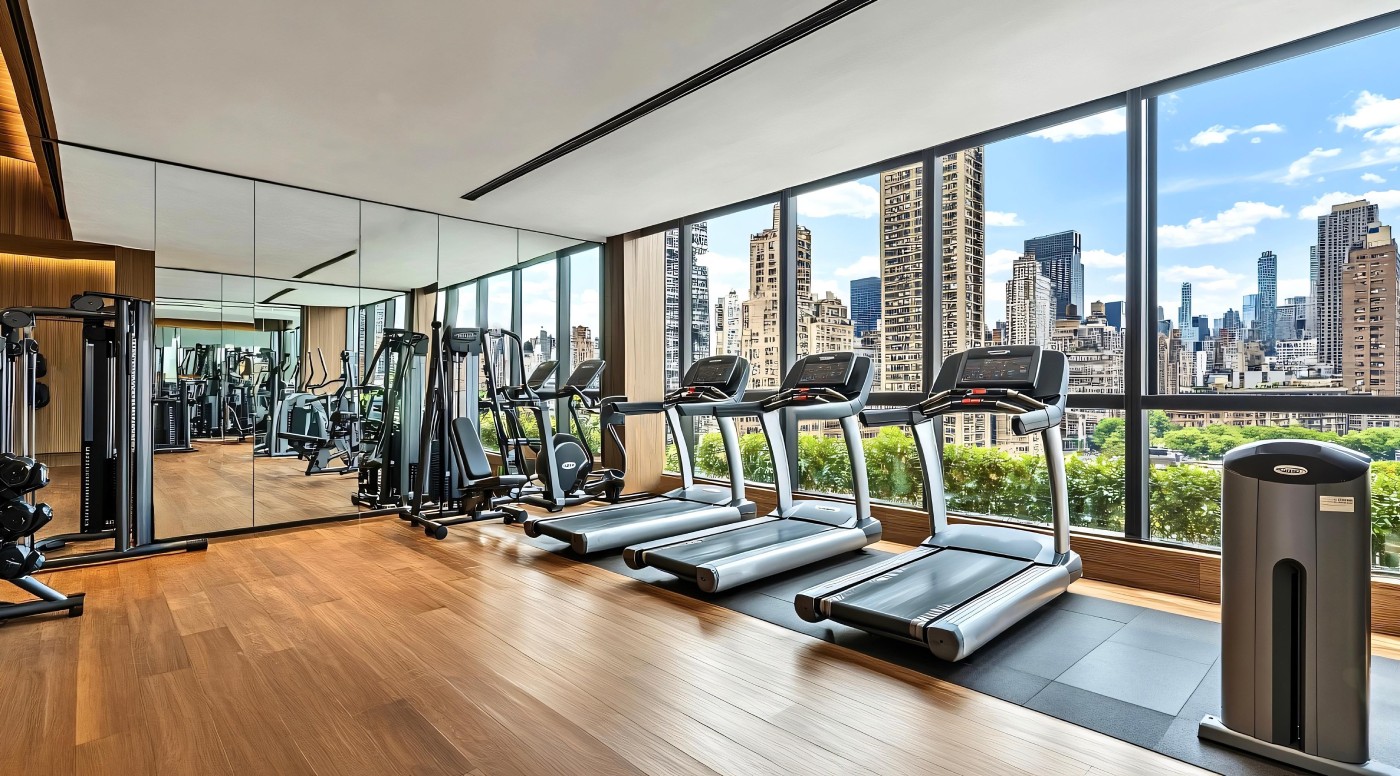
Picture a property manager at a Class A apartment community receiving the third noise complaint this week. The resident in one unit reports a constant rumble from the fitness center above, a low-frequency vibration that rattles picture frames every morning when the treadmills start. Another resident describes booming thuds from dropped weights every evening. The fitness center is only 1,200 square feet, but the complaints are consuming hours of staff time.
This scenario plays out in multi-family properties across Florida and beyond, and it is especially common in condominium fitness centers, where the amenity often sits directly above or beside residential units. Conventional commercial rubber flooring protects the concrete slab and equipment from wear, but it was not designed to stop vibration from traveling into the building structure.
The two categories of sound at play are impact noise (thuds from dropped dumbbells, footfalls, plyometrics) and airborne noise (music, voices, mechanical hum). The right gym flooring system, combining rubber flooring with resilient acoustic underlayment and targeted soundproof floor mat zones, can reduce vibration transfer and quiet these complaints.
Key Takeaways
- Most apartment fitness noise complaints stem from impact noise and vibration traveling through the building structure, not from members being too loud.
- Standard rubber flooring alone rarely solves noise complaints. A layered flooring approach using dense rubber with an acoustic underlayment minimizes noise complaints most effectively.
- Property managers should diagnose whether complaints are impact-based (thuds, vibration) or airborne (music, voices) before purchasing new flooring or soundproof floor mat solutions.
- STC and IIC ratings describe how whole floor-ceiling assemblies handle airborne and impact sound, not individual flooring products in isolation.
- Specialized Fitness Resources is a Florida-based partner with more than three decades in rubber flooring and acoustical solutions for multi-family fitness centers.
Create a Quieter, More Comfortable Fitness Center
Noise complaints do not have to be an ongoing problem for your property. Specialized Fitness Resources provides commercial fitness flooring, acoustical solutions, and soundproofing options designed for the demands of condominium and apartment fitness centers. With more than 28 years of experience, we can help you select the right flooring system for your space and provide both materials and installation.
Ready to reduce noise and improve your fitness center? Call Specialized Fitness Resources at 305-752-0451 to discuss your flooring needs or request a quote.
Why Do Apartment Fitness Centers Create So Many Noise Complaints?
Unlike a standalone gym, a 1,000- to 2,000-square-foot apartment fitness room shares walls, ceilings, and structural connections with sleeping areas. Fitness rooms generate structural vibrations from heavy equipment and dropped weights throughout the day: residents run on treadmills before work, HIIT classes happen in the evening, and weekend traffic adds more impact. Noise complaints arrive at all hours.
Dropping dumbbells, kettlebells, and plates injects impact energy into the floor assembly. That energy can travel through concrete or wood framing and arrive in units below as booms or rattles. Industry acoustic research on multi-story residential buildings shows that heavyweight impact noise, the category that covers footfalls, jumping, and dropped objects, is consistently the largest driver of inter-floor noise complaints, accounting for roughly seven in ten cases in markets where this has been studied closely.
Treadmills, ellipticals, and rowers transfer continuous low-frequency vibration into the structure. Residents often report this as “a constant rumble” or “ceiling shaking” rather than a sharp noise. Group workouts, jumping exercises, and functional training add more impact unless properly isolated.
Airborne sources matter too. Bluetooth speakers, TVs, conversations, and machine motors travel through air and leak via doors, ductwork, and thin demising walls. Construction type also matters: concrete can carry vibration long distances through rigid connections, while wood framing can amplify certain impact frequencies. Both pass noise if not detailed acoustically. Simply installing a 3/8-inch rubber floor on top of the existing structure may protect the slab but often leaves the root cause of noise complaints, vibration transmission, unsolved.
Also Read: How Can Upstairs Fitness Centers in Miami Minimize Sound and Vibration with the Right Flooring?
What Is the Difference Between Impact Noise and Airborne Noise?
Distinguishing impact noise from airborne noise is the first step before investing in new flooring or sound treatments. These two categories behave differently and require different solutions.
Impact noise is created when one object strikes another, sending mechanical energy through the building structure rather than just through the air. Common examples in apartment gyms include dropped weights on rubber flooring, barbell landings on a platform, footfalls on treadmills, jump squats on studio flooring, and cable weight stacks bottoming out. Residents below often notice doors or picture frames rattling when someone is weightlifting or dropping weights above.
Published acoustic field testing has measured a 90-joule dumbbell drop onto a 22 mm mat over a 260 mm concrete slab still producing structure-borne noise 32 dBA above the allowable limit in the unit below, and a 420-joule Olympic bar drop with bumper plates exceeding the limit by roughly 20 dB through airborne transfer alone.
Airborne noise consists of sound waves traveling through the air that pass through walls, ceilings, doors, and glazing. In multi-family gyms, this includes music from wall-mounted speakers, TVs streaming classes, conversations, and the higher-frequency hum of machine motors.
The distinction matters because flooring systems and resilient underlayments are especially effective for reducing impact noise and vibration, while airborne noise control usually requires wall and ceiling insulation, acoustic panels, door upgrades, or sound masking. Thicker rubber or a soundproof floor mat helps with impact noise, but it will not fix a loud TV bleeding through a hollow-core door. Property managers should match their solution to the actual complaint.
Can the Right Fitness Flooring Reduce Noise and Vibration?
Rubber flooring reduces impact noise in fitness centers, but the type of system matters. Many standard commercial rubber rolls or tiles (6–8 mm, glued directly to concrete) were designed for durability, slip resistance, and shock absorption, not acoustic isolation in a residential context. The best flooring option for fitness centers above apartments combines rubber flooring with a dedicated acoustic underlayment in a layered system.
Here is how a layered flooring system works:
| Layer | Function |
|---|---|
| Wear layer (rubber flooring, vinyl sports surface, interlocking rubber tiles) | Provides traction, easy cleaning, durability under cardio and strength equipment |
| Resilient underlayment (recycled rubber or engineered acoustic underlayment) | Absorbs and decouples impact energy from the structure, contributing to noise reduction |
| Structural subfloor (concrete slab or wood framing) | Carries the load; benefits from being isolated from the wear surface above |
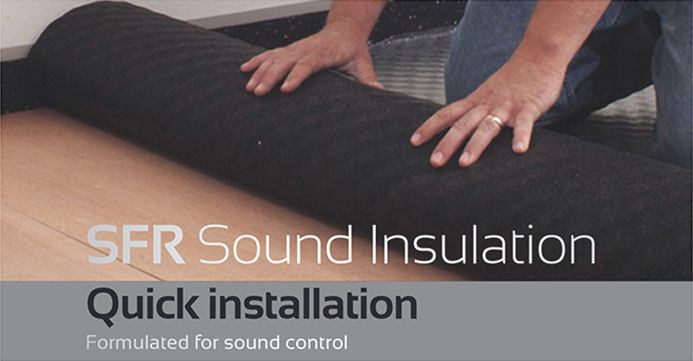
A dedicated underlayment does most of the acoustic work in this system. Our SFR Sound Insulation is a flat, resilient underlayment installed directly beneath the wear layer, compatible with rubber, vinyl, tile, and wood finishes over both concrete and wood-joist construction. At 5mm thick, it’s rated to outperform 1/2-inch cork, and with a wood floor finish it’s tested to IIC 72 / STC 72, backed by more than 400 independent lab and field tests. It also doubles as a crack isolation membrane under tile, which matters in mixed-use lobbies and amenity gyms where flooring transitions between materials.
Installing a decoupled floor system is one of the most effective ways to reduce how much impact noise and vibration reach the structure below, particularly in wood-frame apartment buildings, second-floor amenity gyms, podium-style projects with fitness over residential, and compact rooms with heavy free-weight traffic. Floating floor systems, which use elastic isolation pads beneath a mass layer, work on the same principle: decoupling the wear surface from the structure rather than relying on the wear layer alone.
Sound-deadening mats cut down vibration from heavy weights when placed in free-weight zones, and weightlifting drop pads further reduce noise from dropped weights. Using thicker rubber in high-impact zones reduces vibration and noise from weights, while thinner, firmer surfaces under cardio equipment provide the stability those machines need. The optimal system balances acoustics, safety, budget, and the density of each layer for the frequencies you’re trying to control.
How Can Property Managers Tell If Flooring Is Causing the Noise Problem?
Before committing to a flooring upgrade, managers should perform a basic on-site assessment tied to actual noise complaints.
Start with resident feedback. Log whether complaints happen early morning or late evening, whether residents report thuds, rattling, or bass-heavy rumble, and whether issues are localized directly below or extend to adjacent unit stacks. Visit the complaining unit while the gym is in use. Try specific activities like treadmill running, dumbbell drops from different heights, and box jumps to see which ones trigger the issue.
Inspect the fitness room. Note:
- Current flooring type (6 mm rubber, carpet, luxury vinyl plank) and thickness
- Whether any resilient underlayment exists under the visible surface
- Gaps, hard transitions, or areas where rubber flooring is directly glued to concrete without an acoustical layer
- Equipment placement: are treadmills and racks directly over bedrooms?
- Condition of seams and edge pieces
Document whether equipment can be relocated over corridors, storage rooms, or garages to reduce perceived noise. Proper gym layout can minimize noise complaints from residents without any flooring changes.
If complaints persist across many units or include creaking, cracking, or structural resonance, the issue may involve the floor-ceiling assembly, framing connections, or poorly insulated walls beyond what flooring alone can solve. In complex cases, an acoustic consultant or building engineer can measure vibration across frequency bands and recommend a combination of flooring, structure, and layout changes.
What Do STC and IIC Ratings Mean for Apartment Fitness Centers?
STC and IIC are lab-derived metrics used to compare how different floor-ceiling assemblies block or reduce sound transfer. Property managers will encounter these numbers when reviewing flooring options, so understanding what they measure and what they do not is essential.
STC (Sound Transmission Class) rates how well a wall or floor-ceiling assembly reduces airborne sound such as music, speech, or general room noise between spaces.
IIC (Impact Insulation Class) measures impact sound transmission through floors, including footsteps, dropped items, and fitness activities transmitted through the structure. Acoustic underlayment can improve IIC ratings for a given assembly. Under ASTM-based lab tests, rubber and cork underlayment systems over concrete can yield IIC values in the 55-65 range, though field-rated IIC tends to run 5-10 points lower.
These ratings describe the performance of the whole assembly: flooring, underlayment, slab thickness, ceiling construction, and insulation type. A single product’s published IIC does not automatically transfer to every building. Use STC and IIC as comparison tools between flooring systems, but avoid assuming that one number will guarantee quiet apartments in every project. Many HOAs and building codes now require IIC of 55 or higher for assemblies above residences.
How Much Does a Noise-Reducing Fitness Flooring Upgrade Cost?
Costs vary based on several factors, so the goal here is to outline the main price drivers rather than quote specific dollar amounts.
Key cost factors include:
- Square footage of the gym space
- Whether existing rubber flooring, carpet, or other material must be removed
- Subfloor condition (concrete slab vs. wood, levelness, moisture)
- Underlayment thickness and type (thicker or higher-performance acoustic layers cost more but deliver greater noise reduction)
- Top wear layer: rolled rubber flooring, interlocking tiles, vinyl sports flooring
- Equipment relocation, temporary amenity closures, transitions to adjacent floor finishes
Frame the purchase against the ongoing cost of unresolved complaints: staff time on conflict resolution, resident dissatisfaction, online review risk, and resident turnover. Repeated attempts to fix a noise problem with the wrong material waste budget. Addressing the source of the problem once, with proper flooring, is a better investment than cycling through ineffective solutions. Proper flooring can prevent noise complaints in multi-family gyms when specified correctly from the start.
Also Read: What’s the Best Gym Flooring Thickness for Home and Commercial Gyms in Miami? Find Out Here!
What Can Property Managers Do to Prevent Fitness Center Noise Complaints?
Planning for acoustics during design or renovation is far more cost-effective than reacting after residents post complaints. Here is a preventive checklist:
- Specify gym flooring with an integrated resilient underlayment in any multi-family fitness room that sits over or next to residential units
- Zoning improves noise control in fitness centers by matching floor materials to specific activities; create dedicated free weight zones with thicker rubber flooring or localized soundproof floor mats over the least noise-sensitive spaces
- Position cardio equipment on stable flooring away from shared bedroom walls, and use vibration-damping pads that stop vibrations from traveling through the floor
- Selectorized machines minimize noise from heavy weights compared to plate-loaded alternatives; consider them for stacked residential buildings
- Sound-absorbing mats help prevent noise complaints in gyms when placed under heavy racks and platforms
- Weekly maintenance checks can prevent noise issues in gyms; regular maintenance of gym equipment reduces noise spikes during operation by catching loose bolts, worn belts, and uneven mats early
- Signage can encourage residents to manage noise politely; post clear quiet hours and equipment etiquette so expectations support the acoustic design
Ready to Stop Fitness Center Noise Complaints Before They Escalate?
If you are fielding noise complaints from residents near your fitness center, you do not have to hope the problem resolves itself. Specialized Fitness Resources brings more than three decades of experience in the rubber and fitness flooring industry to multi-family, HOA, and condo applications across Florida, including Miami, Fort Lauderdale, West Palm Beach, Naples, Orlando, Tampa, Jacksonville, and Ocala.
We both supply and install noise-conscious gym flooring systems such as SFR Sound Insulation, including eco-friendly material options, so material selection, layout design, and field-tested installation practices are coordinated from the start. Share details about your building construction, current flooring, equipment layout, and typical complaints with our team. We will recommend a tailored flooring and acoustical approach that matches your building, your budget, and your residents’ expectations.
Request a site evaluation, sample materials, or a project-specific quote so you can move from ongoing noise complaints to a quieter, more resident-friendly fitness amenity.
We are the industry leader in sports surfacing, specialty rubber products, and equipment. Our knowledgeable staff is ready to assist you. Call us today at 305-752-0451 to request a quote.
Frequently Asked Questions
Can we retrofit noise-reducing flooring in an existing, occupied apartment building?
Yes. Most noise-reducing rubber flooring and underlayment systems can be installed as a retrofit, typically in phases to keep some gym access open for residents. Successful projects usually involve scheduling work during business hours, temporarily relocating equipment, and communicating timelines clearly so residents understand when noise and amenity interruptions will occur.
Will replacing carpet with rubber flooring make our fitness center noisier?
Thin carpet can absorb some airborne sound but offers limited protection against impact noise from weights and cardio equipment. Upgrading to a properly designed rubber flooring system with acoustic underlayment will usually reduce impact noise more effectively than carpet. If airborne noise is also a worry, wall and ceiling treatments can be added to keep room noise manageable.
Do we need different flooring under free weights and cardio machines?
Many multi-family gyms benefit from zoning: thicker, higher-impact rubber flooring or soundproof floor mats in free weight and functional training areas, and slightly firmer, thinner systems under cardio for stability and equipment performance. Thick structural rubber flooring and interlocking rubber tiles reduce impact noise and vibration in the areas that need it most. Design transitions and color changes so residents intuitively understand where heavier lifting is appropriate, which also helps control noise complaints.
How long does a typical fitness flooring replacement take?
Timelines depend on room size and complexity. A 600 to 1,200 square foot apartment fitness center can often be demoed and re-floored in a few days of active work, plus cure time if adhesives are used. Build in extra time for moving equipment, punch-list corrections, and any touch-ups to baseboards or transitions. Expect some bother for residents during the process, but the life of the new floor and the reduction in complaints make it worthwhile.
Can flooring alone fix noise from very heavy lifting, like Olympic weightlifting?
Even the best rubber flooring and acoustic underlayment have limits when users repeatedly drop heavy barbells from overhead. Thicker rubber flooring absorbs noise better than thin options, but in wood-frame or stacked residential buildings, the energy from a heavy Olympic bar drop can still exceed allowable noise limits significantly. In multi-family settings, property managers often limit Olympic lifting, provide designated drop pads in controlled zones, or place intense lifting areas only on ground-level slabs-on-grade to keep noise under control. That is not an unreasonable restriction when residents live directly below.