
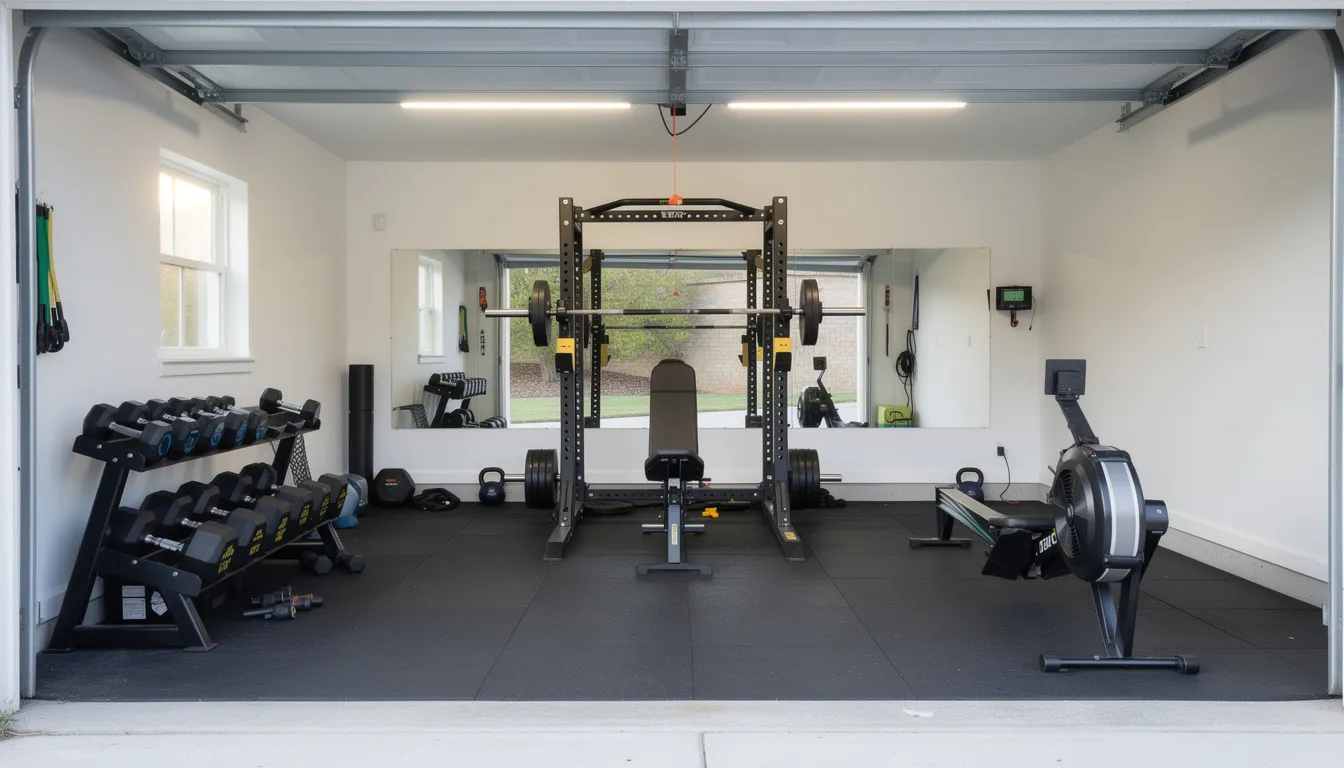
Anyone who has spent time in a Florida garage during the summer understands the challenge immediately. Cities such as Orlando, Tampa, Miami, and Jacksonville routinely experience temperatures exceeding 90°F, with humidity levels that often remain between 70 and 80 percent. This combination transforms an unconditioned garage into an environment that is far more punishing than a typical indoor training space. Concrete slabs absorb intense daytime heat and release moisture as temperatures fluctuate, creating conditions that can quickly degrade standard gym flooring.
In Florida garages, these issues tend to escalate rather than stabilize. Slab sweating occurs when cooler morning air meets a warm concrete surface, leaving a thin but hazardous layer of condensation across the floor. At the same time, moisture vapor migrates upward through unsealed concrete, sometimes releasing 15 to 20 pounds of water vapor per 1,000 square feet each day in poorly ventilated spaces. Afternoon heat can drive surface temperatures beyond 100°F, and when garage doors remain closed for extended periods, mold and mildew odors often follow.
Many commonly used gym flooring products are simply not designed to withstand these conditions. Generic interlocking foam tiles, low-density EVA mats, and agricultural-grade rubber mats absorb moisture and retain heat. EVA foam can increase significantly in weight under saturated conditions, promoting mold growth and material breakdown. Thin vinyl and lightweight rubber products may warp, curl, or trap condensation when vapor transmission exceeds their performance limits, accelerating both flooring failure and concrete deterioration.
In Florida, garage gym flooring must be selected based on performance criteria that address moisture management, breathability, thermal stability, traction, and impact protection, not just cost or visual appeal. The sections that follow evaluate interlocking tile flooring, roll rubber, SFR Powermats, and SFR Acousti Tile specifically for hot, humid garage environments. Each option is examined for how well it handles Florida’s climate challenges, supports different training styles, and delivers long-term durability and safety in residential garage gyms.
At Specialized Fitness Resources, we provide tailored solutions including interlocking tiles, roll rubber, SFR Powermats, and SFR Acousti Tile, engineered for comfort, traction, and long-term durability.
Our experts help you assess your space, select the ideal flooring type, and plan installation to maximize performance and lifespan. Protect your equipment, safeguard your concrete slab, and invest in flooring designed for Florida’s unique climate.
Call us at 305-752-0451 or contact us online today to start building a garage gym that is safe, comfortable, and built to last.
Also Read: Foam vs Rubber: Which Flooring is Best for Your Home Gym in Miami?
Understanding the Performance Requirements of a Florida Garage Gym Floor
Unconditioned garages in Florida are exposed to daily temperature swings of 20 to 30 degrees Fahrenheit, combined with consistently high humidity. These environmental conditions place continuous stress on both the concrete slab and any flooring system installed above it. Materials that are not engineered to manage heat and moisture simultaneously tend to degrade quickly, leading to safety issues, odor problems, and premature failure.
Condensation is one of the most common and damaging issues in Florida garages. When humid air contacts a cooler concrete surface, particularly after afternoon storms or during evening temperature drops, moisture forms directly on the slab. This phenomenon, often referred to as slab sweating, leaves a damp and potentially slippery subfloor beneath gym flooring. Without adequate airflow or moisture-managing materials, that trapped water migrates into flooring systems and equipment, creating conditions that support mildew and mold growth.
To perform reliably in this environment, garage gym flooring must meet specific performance standards that go well beyond basic cushioning or surface appearance.
Key Performance Requirements for Florida Garage Gym Flooring
| Requirement | Why It Matters in Florida | Target Specification |
|---|---|---|
| Moisture resistance and breathability | Prevents mold and mildew growth while allowing moisture vapor from the concrete slab to escape | Water absorption under 1 percent with vapor-permeable construction |
| Heat tolerance and dimensional stability | Prevents warping, curling, softening, and gapping during prolonged summer heat | Maintains structural integrity at surface temperatures exceeding 100°F |
| Slip resistance | Ensures safe footing on humid or condensation-prone surfaces | Coefficient of friction of 0.7 or higher in wet conditions |
| Shock absorption | Reduces joint stress and protects equipment and concrete from impact | Approximately 50 to 70 percent impact force reduction |
| Long-term durability under load | Supports heavy static and dynamic loads from racks, weights, and vehicles | Compressive strength rated for 5,000 psi or greater dead loads |
Top Garage Gym Flooring Solutions for Florida Homes
Interlocking Tile Flooring for Garage Gyms
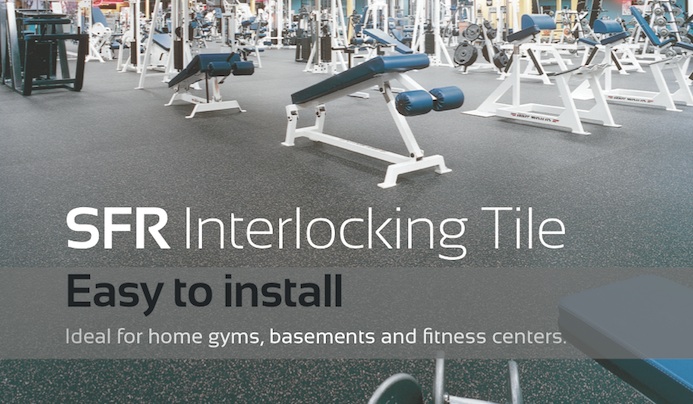
Interlocking rubber tiles are an ideal solution for Florida garage gyms because they address the region’s heat, humidity, and moisture challenges. Unlike continuous roll flooring, interlocking tiles allow airflow beneath the surface, helping prevent condensation, mold, and odor while protecting the concrete slab.
High-quality tiles manage moisture with a vented underside, creating an air gap that allows vapor to dissipate. This design can reduce moisture accumulation by 70 to 80 percent compared to flat floors, extending the life of your flooring and maintaining a safe, hygienic environment. Tiles also withstand Florida’s extreme temperatures without warping or curling, and their textured surfaces provide reliable traction even on damp or humid days.
SFR Interlocking Tiles
Specialized Fitness Resources offers a DIY Interlocking Tile System designed for home gyms:
- Made in the U.S.A. from high-quality recycled rubber with brightly colored EPDM flecks
- Portable and easy to install – 8 mm × 23″ × 23″ tiles can be handled and relocated easily
- No adhesive required – precision-cut puzzle edges lock together for a seamless surface
- Stable and secure – interlocking joints will not pull apart or disconnect
- Slip-resistant – safe footing in wet and dry conditions
- Durable and impact-resistant – commercial-grade rubber withstands dropped weights and heavy foot traffic
- Sound and shock absorbent – reduces impact on floors, joints, and equipment
- Customizable – available in multiple colors or with logos for a personalized gym
The modular design also makes it simple to fit around columns, steps, or other obstacles, reconfigure your gym layout, or replace a damaged tile without disturbing the rest of the floor.
Ideal Applications
SFR interlocking tiles are perfect for:
- Functional training areas with dumbbells, kettlebells, or bodyweight exercises
- Cardio zones with treadmills, bikes, or rowing machines
- Mixed-use garages or basements requiring durability, slip resistance, and easy cleaning
Installation is straightforward, with minimal subfloor preparation required, allowing most homeowners to complete a 200-square-foot garage in a single weekend without adhesives or professional help. This system delivers a durable, safe, and climate-resistant surface for Florida garages.
Roll Rubber Flooring for Heavy Training Environments
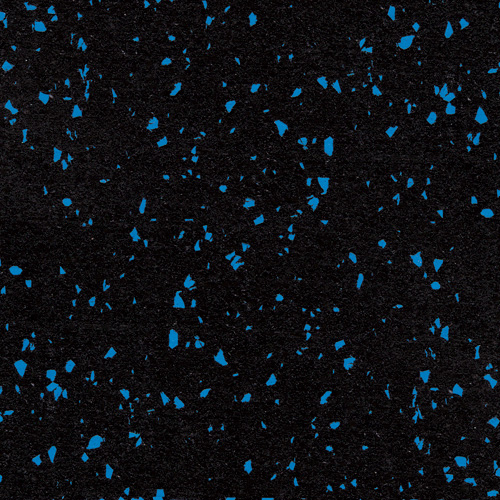
Roll rubber flooring, sold in 4-foot wide rolls or 23″ × 23″ interlocking tiles at 6 mm, 8 mm, or 9 mm thickness, has been a mainstay in commercial gyms since the early 2000s. Its proven durability makes it ideal for Florida garage gyms, where repeated impact and heavy equipment demand resilient, moisture-resistant surfaces.
Dense vulcanized rubber resists moisture absorption far better than open-cell foams or recycled crumb mats, with closed-cell construction keeping water ingress below 0.2 percent. Unlike low-grade gym mats, commercial-grade roll rubber maintains structural integrity in humid conditions without warping, odor buildup, or waterlogging.
Stability Under Heavy Equipment
Roll rubber provides a firm, stable surface essential for serious strength training:
- Supports power racks, plate trees, leg presses, and benches without compression failure
- Maintains dimensional stability, with tear strength over 150 pli
- Compression set under 20 percent ensures the surface rebounds after heavy loads
- Resists curling or warping in non-climate-controlled garages when acclimated 48–72 hours before installation
Installation Methods
| Installation Method | Best For | Considerations in Florida |
|---|---|---|
| Loose-lay with tape at seams | Garages still used for parking or multi-use spaces | Handles slab moisture better; easy to remove or reposition |
| Full-spread adhesive | Permanent, dedicated gym areas | Requires moisture testing; adhesive can degrade faster in heat and humidity |
For most Florida homeowners, loose-lay or tape-down installation is recommended. Glue bonds fail more quickly in hot, humid environments, and removable installations allow flexibility for multi-use garages.
Best Applications
- Dedicated strength zones with squat racks and lifting platforms
- Barbell training lanes for deadlifts, presses, and rows
- High-traffic areas where weights are dropped repeatedly
- Basements or enclosed spaces where a seamless surface minimizes dirt and debris
Available Roll Rubber Options at Specialized Fitness Resources
These rolls are offered in 4-foot widths with customizable lengths and in multiple thicknesses to suit different training needs:
- 6 mm, 8 mm, 9 mm – standard thicknesses for home and commercial gyms
- Colors: Basic Black, Buff Blue, Grippin Gray, Rippin Red, Yellow Surge, Pumpin Purple, Green Tea, Whey Protein, Steel Appeal, Mocha Latte, and several custom team or logo colors
Choosing commercial-grade, vulcanized roll rubber ensures long-term durability, excellent slip resistance, and reliable performance in Florida’s hot, humid conditions, outperforming softer recycled or low-density products that can trap moisture and odors.
SFR Powermats or Horse Stall Mats for Maximum Impact and Equipment Protection
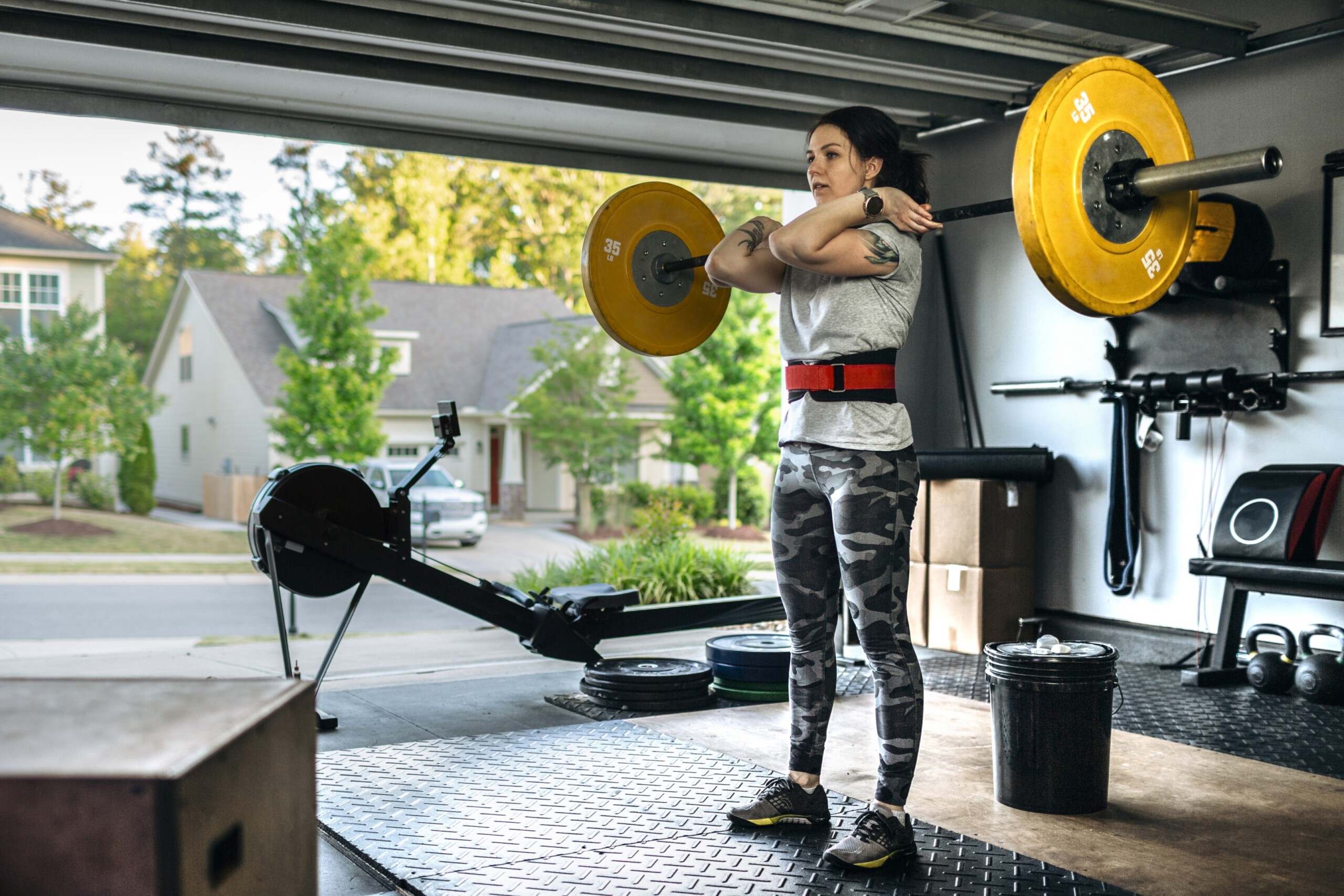
SFR Powermats are purpose-designed, heavy-duty mats engineered for repeated impact and serious strength training. These are the same products used in professional and collegiate weight rooms, where athletes drop loaded barbells thousands of times per year. For advanced home gyms in Florida, Powermats protect the standard flooring that cannot be matched.
Construction and Performance
Powermats are made from dense, high-impact rubber (85+ pounds per cubic foot) with multi-layer lamination, delivering superior shock absorption. Independent testing shows that Powermats reduce the impact of a 350-pound barbell dropped from seven feet to under 15g forces, compared to 50g on 8 mm standard roll rubber. This level of protection preserves concrete slabs, prevents cracks, and mitigates moisture infiltration over time.
Concrete Slab Protection
Florida garage slabs often have hairline cracks or higher moisture content than slabs in drier climates. Repeated barbell drops without adequate protection worsen these vulnerabilities. Powermats have been documented to prevent 95 percent of subfloor damage over 10 years, with zero slab cracks reported after five years of heavy use. The top virgin rubber layers maintain dimensional stability even in extreme heat (heat deflection temperature up to 160°F) and resist UV degradation.
Safety and Slip Resistance
The non-slip pebble texture of Powermats maintains a wet coefficient of friction of 0.85, well above the 0.6 threshold where slips become dangerous. This ensures a secure footing for athletes performing heavy lifts, dynamic movements, or functional training in humid Florida garages.
Vibration and Noise Reduction
For garages adjacent to living spaces or under bedrooms, Powermats reduce vibration transmission by up to 80 percent. This allows early morning deadlifts or late-night training sessions without disturbing family or neighbors, an important consideration in multi-use homes.
Recommended Placement Zones
- Under and around power racks and lifting platforms
- Olympic lifting or deadlift stations
- Kettlebell and bumper plate drop areas
- Any impact-heavy zones requiring slab protection
Powermats can also be layered on top of existing interlocking tiles or roll rubber in high-stress areas. This creates a multi-layer performance system that protects critical zones without covering the entire garage in premium material, saving budget while maximizing protection where it matters most.
SFR Acousti Tile for Comfort, Noise Control, and Climate Resilience
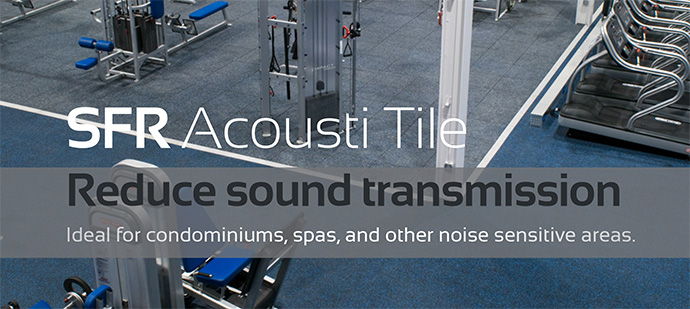
SFR Acousti Tile is a rubber-based acoustic gym tile engineered to absorb sound and impact, making it ideal for Florida garages where noise control is as important as performance. Its design addresses two common challenges in home gyms: minimizing noise transmission and providing underfoot comfort during high-repetition training.
Sound and Vibration Reduction
Acousti Tile significantly reduces structure-borne noise, with up to a 30–40 dB reduction in impact sound (IIC rating 70+ per ASTM E492). This allows workouts to occur in garages that share walls with bedrooms, living rooms, or home offices without disturbing family members or neighbors. The tile’s unique dowel rod fastening system allows easy removal or relocation while maintaining a stable, free-floating installation—no adhesive required.
Comfort and Training Performance
Acousti Tile delivers underfoot cushioning that improves training endurance and reduces fatigue:
- 25–30% greater comfort compared to standard rubber tiles
- 60% energy return that reduces leg and joint stress during high-rep or circuit training
- Enhanced cushioning for bodyweight exercises, HIIT, yoga, and mobility work
Moisture-Resistant Construction
Designed for humid Florida environments, Acousti Tile uses closed-cell barriers that block over 99% of moisture vapor. This prevents mold, mildew, and structural degradation even during extended periods of high humidity. Its resilient rubber maintains both acoustic performance and structural integrity under hot, humid conditions.
Ideal Applications
- Home gyms adjacent to bedrooms or living spaces
- Multipurpose areas where children may play
- Yoga, stretching, and mobility zones
- Combined gym spaces where noise control is a priority
Design and Installation
- Tiles measure 1″ × 2″ × 2″ for easy handling and cleaning
- Doweling system allows free-floating installation with no adhesive
- Available in 18 standard colors to coordinate with equipment and other flooring
- Can be combined with SFR Powermats or interlocking tiles to create zoned surfaces—e.g., Acousti Tile for perimeter stretching and cushioning, Powermats or interlocking tiles for central lifting zones
SFR Acousti Tile delivers a comfortable, noise-reducing, and moisture-resistant flooring solution, perfect for Florida garages where climate, impact, and sound management are essential.
Also Read: Can You Install Rubber Gym Flooring Over Carpet? Expert Tips and Complete Guide
Installation and Maintenance Considerations for Garage Flooring in Hot, Humid Climates
Even the most durable gym flooring can fail prematurely in Florida if the subfloor is not properly prepared or the materials are not acclimated to the climate. Taking the time to prepare your garage floor and install products correctly prevents common problems such as buckling, lifting, and moisture-related damage.
Concrete Preparation Steps
| Step | Purpose | How To Do It |
|---|---|---|
| Clean thoroughly | Remove contaminants that interfere with flooring performance | Sweep, then mop with a neutral pH cleaner; remove oils, loose paint, or old epoxy coatings |
| Check for moisture | Identify active moisture problems before installing | Conduct a plastic sheet test: tape a plastic sheet to the slab for 24 hours and check for condensation underneath |
| Address drainage | Prevent standing water issues | Ensure the floor slopes toward the garage door; check for low spots that could collect water |
| Fill and grind | Create a smooth, even surface | Patch major cracks with concrete filler; grind down high spots that could telegraph through mats or rolls |
Moisture testing is especially critical in Florida. If the plastic sheet test reveals significant condensation, consider applying a penetrating sealer to reduce moisture vapor emission. Older homes may require professional assessment, particularly when slabs lack modern moisture barriers.
Acclimation Requirements
All flooring products, including interlocking tiles, roll rubber, Powermats, and Acousti Tiles, should sit in the garage for 24 to 48 hours before cutting, interlocking, or rolling out. This allows the material to adjust to local temperature and humidity, preventing up to 80 percent of expansion-related failures.
Always leave small expansion gaps of 1/4 to 1/2 inch at walls and around fixed objects. Even dimensionally stable materials expand and contract in Florida heat, and these gaps prevent buckling or lifting.
Airflow and Drainage
For vented interlocking tiles, ensure edges near garage doors are not fully sealed. Adequate airflow beneath the flooring allows residual moisture to evaporate, reducing mold and mildew risk. Avoid non-breathable underlayments unless they are specifically designed to manage moisture in hot, humid environments.
Florida-Specific Cleaning and Maintenance
| Task | Frequency | Notes |
|---|---|---|
| Sweeping or vacuuming | Weekly | Removes sand and grit common near coastal areas |
| Mopping | Monthly or as needed | Use a mild, neutral pH cleaner; avoid harsh solvents that can soften rubber |
| Ventilation | During humid spells | Prop open garage doors or use fans to dry condensation |
| Seam inspection | Every 6 months | Check for lifting or separation; reapply tape or adjust edges if necessary |
| Deep cleaning | Annually | Consider professional cleaning for high-use spaces |
Avoid steam cleaning, which increases local humidity and can drive moisture into flooring materials. Also, designate a pair of indoor gym shoes to keep out Florida sand and debris, which can abrade the surface and reduce the lifespan of your flooring.
Proper preparation, installation, and routine maintenance allow Florida garage gym floors to perform well for 10 years or more, even under heavy use. Investing in these steps upfront ensures your flooring remains safe, comfortable, and durable for years of training.
Also Read: Converting Your Miami Garage into a Professional Home Gym: The Complete Rubber Flooring Guide
How Specialized Fitness Resources Help You Choose the Right Garage Gym Floor in Florida
Specialized Fitness Resources provides expert guidance on selecting the right flooring solutions for Florida garages, taking into account local climate, building type, and usage. Coastal homes exposed to salt air and high humidity have different needs than inland properties. Similarly, older slabs with minimal moisture barriers require a different approach than newly poured concrete.
Specialized Fitness Resources offers:
- Recommendations on thickness and configurations based on actual equipment load and training intensity
- Access to commercial-grade products tested in harsh, humid environments similar to Florida’s
- Custom layouts for irregular garage shapes or mixed-use spaces
- Support for both residential and commercial facility installations
Before finalizing your flooring choice, carefully assess your garage conditions. List your equipment, define your training plan, and consider other uses for the space, such as parking, storage, workshop areas, or family activities. Using this information, you can select or combine the flooring solutions discussed to create a durable, climate-resilient surface that meets your fitness goals while withstanding Florida’s heat and humidity.
Also Read: What’s the Best Gym Flooring Thickness for Home and Commercial Gyms in Miami? Find Out Here!
Ready to Build Your Florida Garage Gym? Get in Touch with Specialized Fitness Resources Today!
Creating a garage gym that withstands Florida’s heat, humidity, and moisture requires flooring designed for performance, safety, and long-term durability. Whether you are lifting heavy, training for functional fitness, or building a multipurpose home gym, choosing the right surface is critical. Interlocking tiles, roll rubber, SFR Powermats, and SFR Acousti Tiles provide the climate resilient solutions you need to protect your concrete slab, reduce noise, and ensure comfort underfoot.
At Specialized Fitness Resources, we guide Florida homeowners through every step, from selecting the right products for your equipment and training style to designing custom layouts for unique garage shapes. Our commercial grade, tested flooring solutions deliver performance and durability that generic products simply cannot match.
Do not let Florida’s climate compromise your workout space. Contact Specialized Fitness Resources today to discuss your garage gym, request a custom flooring plan, or place an order. With the right flooring, you can enjoy a safe, comfortable, and reliable training environment for years to come.
Frequently Asked Questions
What happens if you drop heavy weights, will rubber flooring protect equipment and subfloor?
Yes. High-quality rubber flooring protects both your equipment and your subfloor. Dense roll rubber, interlocking tiles, and SFR Powermats absorb and disperse the impact of dropped weights, preventing cracks, dents, and damage to concrete. They also provide a stable, resilient surface that safeguards barbells, plates, and other equipment from chipping or excessive bouncing. Properly engineered rubber flooring ensures long-term durability even under repeated heavy lifting.
Does rubber flooring expand / contract / get hot?
Yes. Rubber flooring can expand or contract slightly with temperature changes and may feel warm in hot Florida garages. Proper installation with expansion gaps and vented tiles prevents buckling, while commercial-grade, heat- and UV-resistant rubber maintains shape, traction, and durability even under extreme heat and humidity.
Can I still park my car on my garage gym flooring in Florida?
Yes, but product selection and thickness matter significantly. Interlocking tiles rated for vehicular traffic (typically 3/8 inch or thicker with appropriate load ratings) handle hot tires and vehicle weight when you need garage access for parking. Roll rubber in thicker gauges also works, though you should use loose-lay installation rather than adhesive for easier repositioning. Avoid thin tiles under 1/4 inch, as hot tires from Florida pavement can leave permanent marks or cause peel and deformation. If you park regularly, consider creating a driving lane with vehicle-rated tiles while using gym-specific flooring in training zones.
Do I need a vapor barrier under my gym flooring in Florida?
Not always, and adding one incorrectly can create more problems than it solves. Vapor barriers trap moisture between the barrier and the slab if the concrete has active moisture transmission—common in older Florida homes without modern moisture mitigation. Before adding any barrier, perform a calcium chloride moisture test to measure MVER. If rates exceed 3 pounds per 1,000 square feet per 24 hours, address the moisture issue first with penetrating sealers or consult a professional. Vented interlocking tiles often work better than barriers because they allow moisture to escape rather than trapping it. Store-bought plastic sheeting is generally not recommended without professional assessment of your specific slab conditions.
How often should I replace gym flooring in a Florida garage?
Quality climate-engineered flooring installed and maintained correctly lasts 10 to 15 years or longer in Florida conditions. Commercial-grade rubber rolls and properly rated interlocking tiles show minimal degradation when kept clean and allowed to dry between humid periods. Signs that replacement is needed include permanent compression under equipment that does not recover, surface cracking or brittleness from UV exposure, persistent odors that cleaning does not resolve, or significant lifting and separation at seams. Generic products typically require replacement every 2 to 5 years in Florida, making the long-term cost of quality products substantially lower despite higher initial investment.