
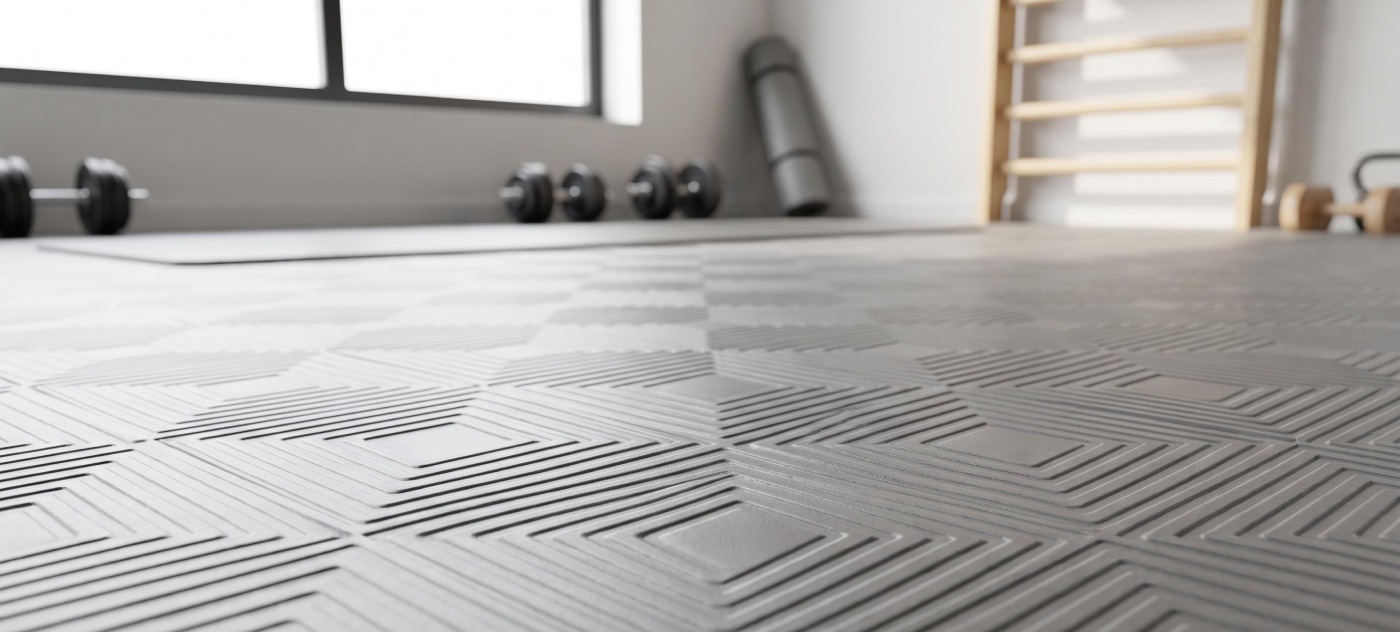
Many Miami spaces are carpeted, from condominium amenity rooms in Brickell and Doral to hotel ballrooms in South Beach and corporate offices Downtown. Those same rooms are increasingly used for workouts, classes, and wellness programs. Carpet alone is too soft and unstable for most exercise, so a firm rubber layer is used to create a safe, level surface while protecting the carpet underneath.
Specialized Fitness Resources (SFR) has supplied and installed fitness flooring since 1993 for condominiums, hotels, gyms, CrossFit boxes, country clubs, and schools. This guide covers how to choose and install rubber flooring over carpet, and when a permanent installation is the better investment.
Find the Right Temporary Gym Flooring for Your Miami Facility
At Specialized Fitness Resources, we help Miami property managers, hotel operators, and fitness facility owners choose flooring that supports safe workouts while protecting existing carpet. With over 30 years of experience supplying and installing fitness flooring, we can help you find a practical solution for your space, activities, and budget. Contact Specialized Fitness Resources at 305-752-0451 to discuss your temporary gym flooring needs and find the right option for your facility.
What Are the Benefits of Installing Rubber Flooring Over Carpet?
Safety and stability: Soft carpet and padding let feet and equipment sink, which raises the risk of rolled ankles and tripping. A firm, dense rubber surface reduces that movement.
Carpet protection: Sweat, chalk, and sand tracked in from the beach can stain and wear carpet fibers. Rubber flooring shields the carpet and keeps the space presentable.
Load distribution: Treadmills, racks, and machines can dent carpet. Dense rubber over a rigid layer spreads that weight.
Flexibility: A floating rubber floor can be lifted and removed without demolition, so a room can serve more than one purpose.
Sound and comfort: Rubber helps dampen impact noise and vibration, which matters in multi-story condominiums and hotels.
Also Read: Flooring for Multi-Family & Apartment Fitness Centers: Solving the Noise Complaint Problem
How Do Different Carpet Types Affect Rubber Flooring Installation?
The carpet underneath determines how well a rubber floor performs. Pile height, density, padding, and condition all matter.
Plush or high-pile carpet (over about 1/2 inch): Very soft and compressible. It compresses under weight and makes rubber flooring unstable, so a plywood layer is almost always needed first.
Medium-pile carpet (about 1/4 to 1/2 inch): Common in offices and hotel corridors. It may work with heavier rubber for light use, but areas with concentrated equipment loads benefit from a rigid layer.
Low-pile and commercial loop carpet (such as Berber): Dense and flat, this is the best candidate for loose-laid rubber tiles or rolls without extra plywood.
Condition matters as well. Dips, raised seams, and loose areas will telegraph through the rubber and create an uneven surface, so inspect and repair them before installation. Heavy lifting and high-impact group training may call for a rigid base even over low-pile carpet.
What Are the Best Temporary Rubber Flooring Options for Carpeted Spaces?
No single product fits every space. The right choice depends on room size, carpet type, and planned activities.
Interlocking rubber tiles
Interlocking rubber tiles lock together to form a floating floor that resists shifting far better than loose mats. Their weight helps them stay in place over firm, short-pile carpet without glue or tape. Tiles can be cut to fit wall to wall, stacked for storage, and reconfigured when a layout changes, which makes them a strong fit for condominium fitness rooms, small training zones, and studios. Specialized Fitness Resources (SFR) offers interlocking options including SFR Interlocking Tile and BestFlex Interlock.
Rubber rolls
Rubber rolls cover larger areas with fewer seams, which suits group fitness rooms, hotel fitness centers, and heavy-traffic areas. SFR Sport Roll is designed for fast, easy installation in small or large fitness centers and comes in 11 standard colors, with custom colors and logos available. On low-pile carpet, rolls lie fairly flat. On softer carpet, they can dish or curl at the edges, so they should go over a rigid plywood layer. Rolls are heavy and usually need a two-person crew to handle.
Dense rubber equipment mats and power tiles
Areas with free weights, racks, or heavy machines need thicker, denser rubber. SFR Power Tile and SFR Equipment Mats are built for these zones, and they perform best when placed over a rigid base on anything softer than low-pile carpet. Many facilities combine two solutions, such as interlocking tiles or rolls for the main floor and dense equipment mats under the rack area.
Rigid plywood base
Plywood is not a finished surface, but it is what makes rubber flooring work over thick carpet. A plywood layer, generally 3/4 inch thick, floats on top of the carpet and creates a firm platform for rubber tiles, rolls, or equipment mats. It spreads weight from heavy equipment and keeps the floor level. Plywood sheets should be staggered like brickwork and fastened to each other rather than to the subfloor, which keeps the system removable.
How to Choose the Right Rubber Flooring Over Carpet
Match the flooring to the workout
Yoga and stretching: Light activity works over low-pile carpet with standard rubber flooring.
Group cardio and functional training: Choose a firm, grippy surface with tight seams. Rubber also improves shock absorption during high-impact movement.
Heavy strength training: Barbell and kettlebell areas need dense rubber over a stable base. Use plywood under the rubber on thick carpet.
Check traction and stability
Over carpet, the biggest risk is a floor that sponges or rocks. Choose firm, dense rubber and a textured surface for grip. Diamond plate rubber flooring is one option that improves traction when users are sweating in Miami’s humidity.
Match durability to the equipment
High-traffic commercial rooms need thicker, denser rubber than an occasional-use wellness room. Lighter products may work for bodyweight circuits but can deform under repeated heavy drops. Compare the manufacturer’s load ratings to your actual equipment list.
Protect the carpet
Even a temporary floor should protect the carpet below. Dark rubber can discolor light-colored carpet, so test a small area first. Never lay rubber over damp carpet.
Plan for Miami’s climate
Year-round humidity means moisture can get trapped between carpet and a non-breathable floor, leading to odors and mold. Do not place plastic sheeting over the carpet. If a separation layer is needed, use a breathable one. Choose rubber that is easy to disinfect and clean, let it acclimate in the room before installation, and inspect under the flooring regularly.
Installing Rubber Flooring Over Carpet Without Damage
For temporary use, no permanent adhesives should go on carpet. A careful sequence protects both the carpet and your flooring investment.
Inspect and clean. Vacuum thoroughly so grit does not grind into the fibers. Make sure the carpet is completely dry, including after any steam cleaning, and repair loose seams, ripples, or water damage first.
Add a plywood layer if needed. For plush or medium-pile carpet, a floating plywood layer goes down before the rubber.
Lay the rubber. Start from a straight wall and work outward with tight joints so there are no gaps to catch shoes.
Manage transitions. Use reducers and ADA ramps where the rubber floor meets bare carpet or other surfaces to prevent trip hazards.
Test the floor. Walk, jump, and move equipment across it to check for shifting or soft spots before opening the room.
Remove with care. Lift tiles and rolls rather than dragging them, clean both the rubber and the carpet, and store tiles flat and rolls loosely rolled.
What Works Best for Different Miami Facilities
Condominium and apartment fitness centers
Condominium fitness rooms are Specialized Fitness Resources’ largest client group. Developers often deliver these rooms carpeted, and residents want an updated fitness area without a full remodel. Dense interlocking rubber over low-pile carpet, with plywood and equipment mats under heavier machines and racks, is a practical solution. Thicker rubber in free-weight zones also helps with sound and vibration in multi-story buildings.
Hotels and resorts
Hotel fitness rooms and ballrooms converted for fitness use need a durable, easy-to-clean surface that installs quickly. Rubber rolls such as SFR Sport Roll cover large areas with few seams and can be customized with colors and logos to match a property’s branding.
Commercial gyms, studios, and CrossFit facilities
Training studios sometimes start in carpeted retail shells. For serious strength training and frequent classes, operators should either remove the carpet or commit to a robust rigid base plus commercial-grade rubber. A temporary overlay can serve as an interim solution for expansion areas, but long-term heavy use usually justifies a permanent floor.
Offices, schools, and country clubs
Carpeted conference rooms, multipurpose rooms, and club spaces can be converted for wellness programs and classes using interlocking rubber tiles. Quick setup outside business hours and complete reversibility make this a flexible plan.
When to Choose a Permanent Rubber Flooring Installation
A temporary overlay works in many cases, but some situations call for a permanent installation:
Regular Olympic lifting, high member volume, or long daily operating hours need an engineered gym floor, not a patchwork overlay.
Permanent rubber flooring over a solid, prepared subfloor improves safety, reduces noise, and lowers long-term maintenance costs.
A professional assessment can determine whether to keep or remove the carpet and design the right system from the ground up.
Specialized Fitness Resources supplies and installs, which means one team handles material selection, planning, and installation for projects across Miami, Ft. Lauderdale, West Palm Beach, Naples, Orlando, Tampa, Jacksonville, and Ocala.
Also Read: What’s the Best Flooring for Pilates, Barre & Reformer Studios? (2026 Guide)
Turning Carpeted Rooms into Functional Fitness Spaces
With the right rubber flooring, a rigid base where needed, and careful installation, Miami facilities can safely convert carpeted rooms into effective fitness spaces. Carpet type, workout demands, and Miami’s climate are the three factors that decide which system fits best. Specialized Fitness Resources offers eco-friendly products, fast turnaround on quotes and samples, and customer service backed by decades of experience.
We are the industry leader in sports surfacing, specialty rubber products, and equipment. Our knowledgeable staff is ready to assist you. Call us today at 305-752-0451.
Key Takeaways
- Rubber flooring can be installed over low-pile commercial carpet for most fitness uses. Plush and medium-pile carpet generally needs a rigid plywood layer underneath for stability.
- The main rubber options for carpeted rooms are interlocking rubber tiles, rubber rolls, and dense rubber equipment mats placed over a rigid base where heavy equipment sits.
- Floating rubber systems protect the carpet below and can be installed and removed without glue or permanent adhesives.
- Miami’s year-round humidity makes moisture control, easy cleaning, and regular inspection essential.
- Specialized Fitness Resources supplies and installs rubber flooring for fitness facilities across Florida, with fast turnaround on quotes and samples.
Frequently Asked Questions
Can you safely install rubber gym flooring over plush carpet?
Rubber flooring should not go directly over plush or very cushioned carpet because it will sink and feel unstable. In most cases, a rigid plywood layer is needed first, especially under racks, benches, and machines. For light yoga or stretching only, a small area may be acceptable, but this is not recommended for heavy training or group classes.
Will rubber flooring stain or damage the carpet underneath?
Floating rubber systems installed without adhesives are designed to sit on carpet and can be removed cleanly. Dark rubber can discolor very light carpet, so test a small area first. Lift sections periodically to check for discoloration, moisture, or crushed pile, especially under heavy machines.
How do you keep rubber flooring from sliding on carpet?
Heavier interlocking tiles with tight edges and a snug wall-to-wall fit greatly reduce movement over low-pile carpet. Over softer carpet, add a plywood layer beneath the rubber. Butting the floor against walls and using reducers or ramps at thresholds also limits lateral slide.
Can rubber flooring over carpet support treadmills and heavy machines?
It can when the carpet is firm, and the rubber is dense. Over plush carpet or under very heavy equipment, use a rigid platform under each machine to spread the load and prevent rocking. Consult a flooring professional if the total weight is high or the room is used all day.
How long can temporary rubber flooring stay down over carpet in Miami?
It depends on the carpet, the room’s ventilation, and how the floor is used. Because humidity can trap moisture, lift sections in a few spots regularly to check for odors, mold, or dampness. For long-term or heavy daily use, a permanent installation is the safer choice. Call Specialized Fitness Resources at 305-752-0451 to discuss the right option for your space.