
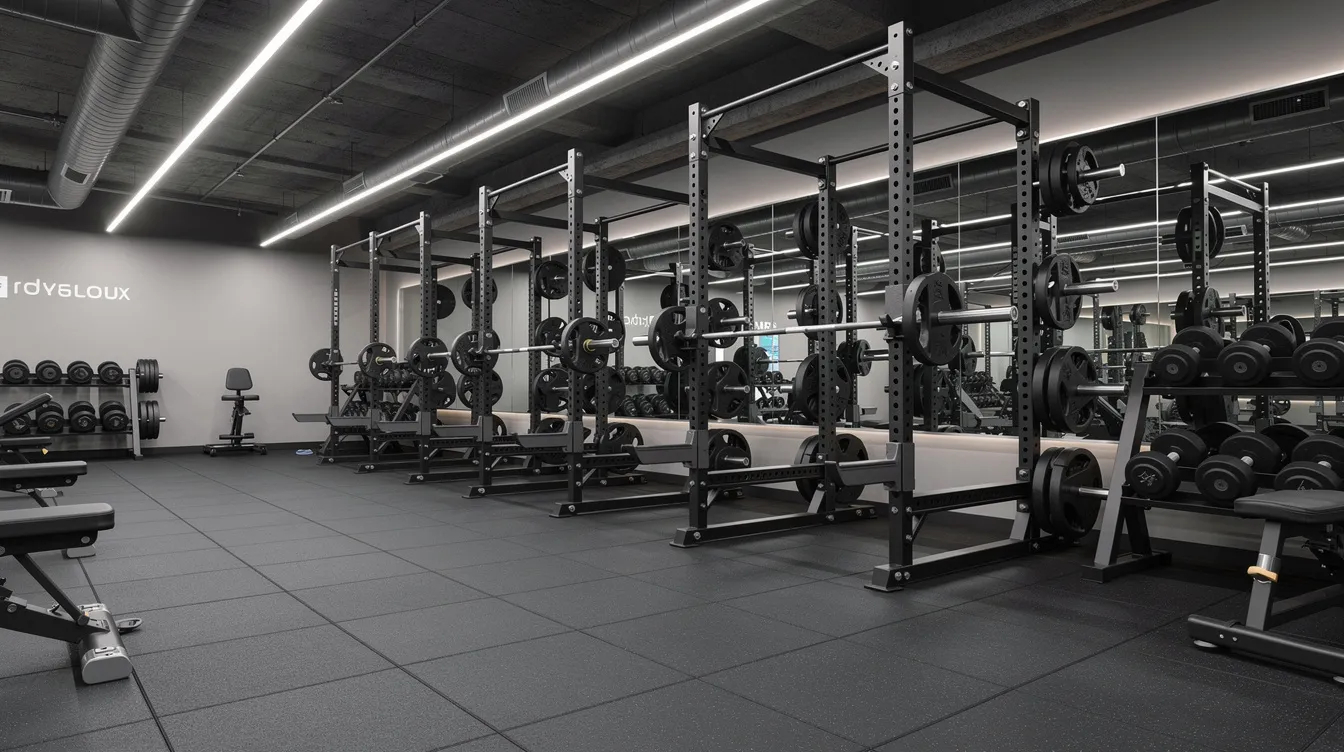
Choosing flooring for a gym, fitness studio, or training facility is one of the biggest long-term decisions in the entire build process. Commercial gym flooring typically requires replacement every 7–15 years, which means the surface underfoot needs to perform across thousands of workouts without failing.
Budget gym flooring – thin rubber mats from big-box stores, generic foam tiles, or residential vinyl – may look acceptable on day one. Premium options include vulcanized rubber rolls, engineered heavy-duty rubber tiles designed for free weights zones, and commercial vinyl systems built for continuous heavy use. The real question is whether that higher upfront price delivers enough value to justify the purchase. The answer depends on your facility type, training load, and how long you plan to operate in that space.
Whether you’re developing a commercial gym, CrossFit facility, university fitness center, hotel fitness room, condominium gym, or training studio, the flooring you choose today will impact safety, durability, maintenance, and member experience for years to come. At Specialized Fitness Resources, we’ve been helping fitness facilities select and install high-performance sports flooring solutions since 1993. Our team understands the unique demands of every training environment and can help you identify the right surface for your goals, budget, and usage requirements.
From heavy-duty rubber flooring and acoustical solutions to functional training turf and specialized fitness surfaces, we provide quality products, professional guidance, and installation services throughout Florida. If you’re evaluating premium versus budget gym flooring, contact us today at 305-752-0451 to discuss your project and request a quote. Let us help you invest in a flooring solution that delivers lasting value and performance.
Also Read: How Long Does Rubber Flooring Last in Miami’s Climate?
Understanding Budget vs. Premium Gym Flooring
Choosing the right flooring starts with understanding how budget and premium products differ in performance, durability, and long-term value.
Typical Budget Gym Flooring Options
Budget flooring typically includes thin rubber mats, EVA foam tiles, basic vinyl products, and entry-level rubber rolls designed for home or light-use environments. These materials can work well in yoga studios, stretching areas, and low-traffic fitness spaces, but they are generally not designed for the demands of commercial weight rooms.
In high-impact areas, budget flooring often develops issues such as edge curling, permanent indentations under heavy gym equipment, seam damage, and premature wear. Many budget products begin showing significant deterioration after just a few years of heavy commercial use.
What Counts as Premium Gym Flooring?
Premium gym flooring includes commercial-grade rubber tiles, heavy-duty rubber rolls, thicker rubber mats, and specialized fitness flooring systems engineered for specific training environments. These products are designed to withstand heavy weights, constant foot traffic, dropped weights, and intensive daily use.
A key example is vulcanized rubber, which offers greater density, durability, and resistance to moisture than many entry-level rubber products. Premium flooring also provides better seam integrity, dimensional stability, and long-term performance in demanding fitness environments.
The Key Difference
Premium flooring is not simply thicker flooring. The real advantage comes from higher material density, stronger construction, and greater long-term durability. These qualities help premium systems maintain their appearance and performance for years of daily commercial use, while budget flooring often requires repair or replacement much sooner.
Also Read: What Flooring Works Best for Aerobic Studios vs. CrossFit Boxes in Miami, FL?
Performance Comparison: How Premium and Budget Flooring Behave in Real Gyms
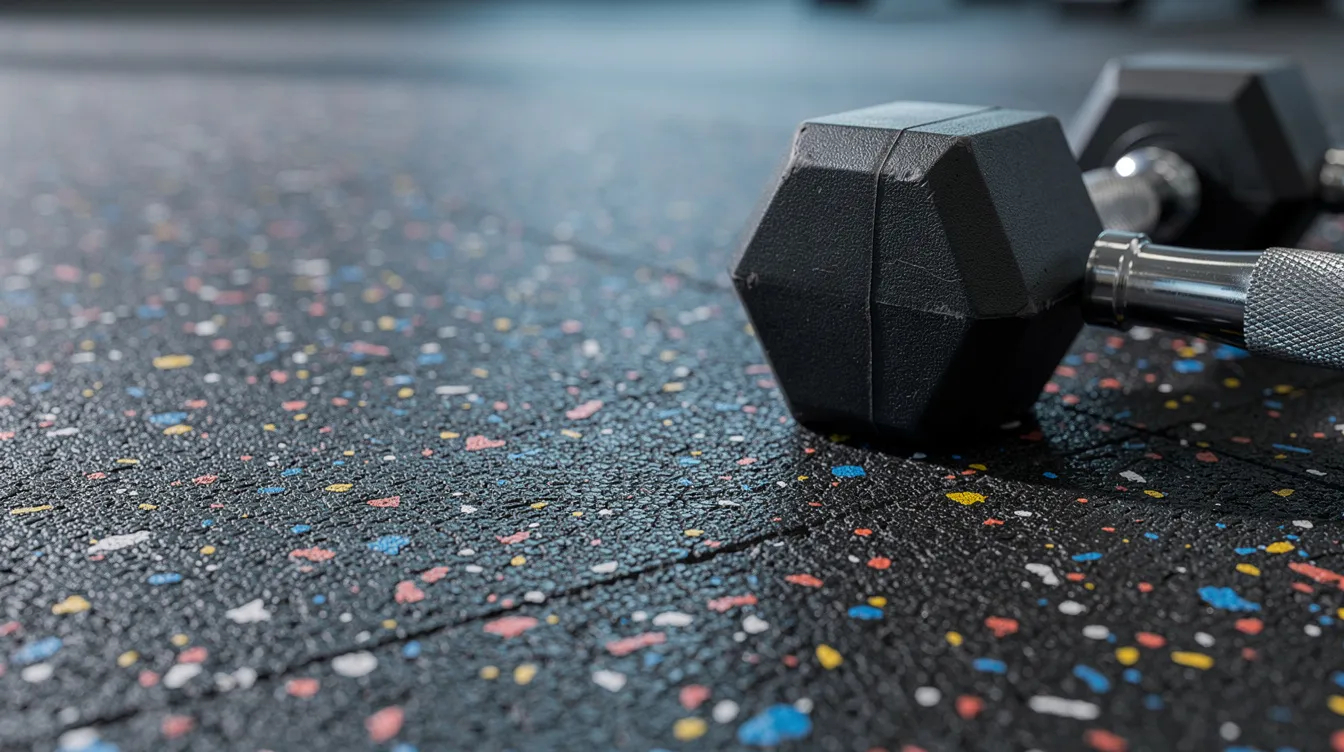
Side-by-side performance over years, not weeks, is the fairest way to judge premium vs budget gym flooring. Four factors matter most.
Durability and Lifespan Under Heavy Use
Premium rubber systems last 15-25 years in general training areas. Heavy free weight zones with repeated drops typically run closer to 10-18 years. Budget floors in busy gyms often need patching or full replacement within 3-8 years. Low-density foam tiles can fail in under two years under commercial load. Replacement costs add up fast and quickly cancel out initial savings.
Safety, Shock Absorption, and Joint Health
Thin or low-density flooring transfers impact force directly to ankles, knees, and joints. Heavy-weight areas need at least 3/8″-1″ dense rubber to absorb that load properly. Products like SFR Powermat and Everlast UltraTile are engineered specifically for these zones. Soft foam compresses underfoot and destabilizes balance during barbell lifts. Vulcanized rubber stays firm yet shock-absorbent, delivering predictable cushioning and consistent traction even when wet. For modular setups, SFR Power Tile offers the same performance in a flexible interlocking format.
Slip Resistance, Moisture, and Hygiene
Premium non-porous rubber holds slip ratings of R10 – R11 even when damp. R10 is the standard for most gym floors; R11 is recommended for wet zones like locker rooms. Vinyl grip degrades with wear over time. Non-vulcanized recycled rubber absorbs moisture and harbors odor, a compounding problem in high-humidity markets like Tampa. For moisture-prone areas, SFR H2O is purpose-built for exactly these conditions, while HydroGrip Motivate handles multi-use performance zones where wet conditions are routine.
Acoustic Control
A loaded barbell dropped on budget mats sends impact noise straight through concrete to whatever is below. Premium rubber with acoustic underlayment meaningfully reduces that transmission, essential for upper-floor gyms, hotels, and mixed-use buildings. SFR Acousti Tile and SFR Dual Core are engineered specifically for sound-reduction environments. Stacking loose budget mats does not replicate that performance.
Member Experience and Brand Perception
Worn, mismatched tiles make well-equipped facilities feel neglected. SFR Sport Roll delivers a clean, seamless look across large training floors. For functional and CrossFit-style spaces, SFR Cross Turf handles sled work, agility drills, and high-rep training in one surface. Where aesthetics are a priority, Luxury Vinyl Plank brings a premium finish to studios, reception areas, and wellness spaces. In a competitive fitness market, how a floor looks and feels directly affects member retention.
Also Read: How Can Upstairs Fitness Centers in Miami Minimize Sound and Vibration with the Right Flooring?
Total Cost Perspective Over Time
When evaluating flooring options, it is important to consider long-term operational impact rather than only initial installation decisions.
Budget flooring may require more frequent maintenance attention and eventual replacement in high-use environments. Over time, this can lead to repeated disruption and ongoing operational planning.
Premium flooring systems are designed to reduce lifecycle interruptions by maintaining performance consistency over extended periods. This creates a more stable operational environment and reduces the need for repeated flooring overhauls.
From a facility management perspective, this stability often becomes a significant advantage, particularly in long-term commercial operations.
When Budget Flooring Is Appropriate
Budget flooring can be a practical choice in specific scenarios:
- Temporary or short-term facilities
- Low-traffic training environments
- Office or administrative fitness areas
- Supplementary spaces with minimal equipment use
- Initial startup environments with limited operational scale
In these cases, the functional requirements are lower, and advanced performance features may not be necessary.
When Premium Flooring Becomes Essential
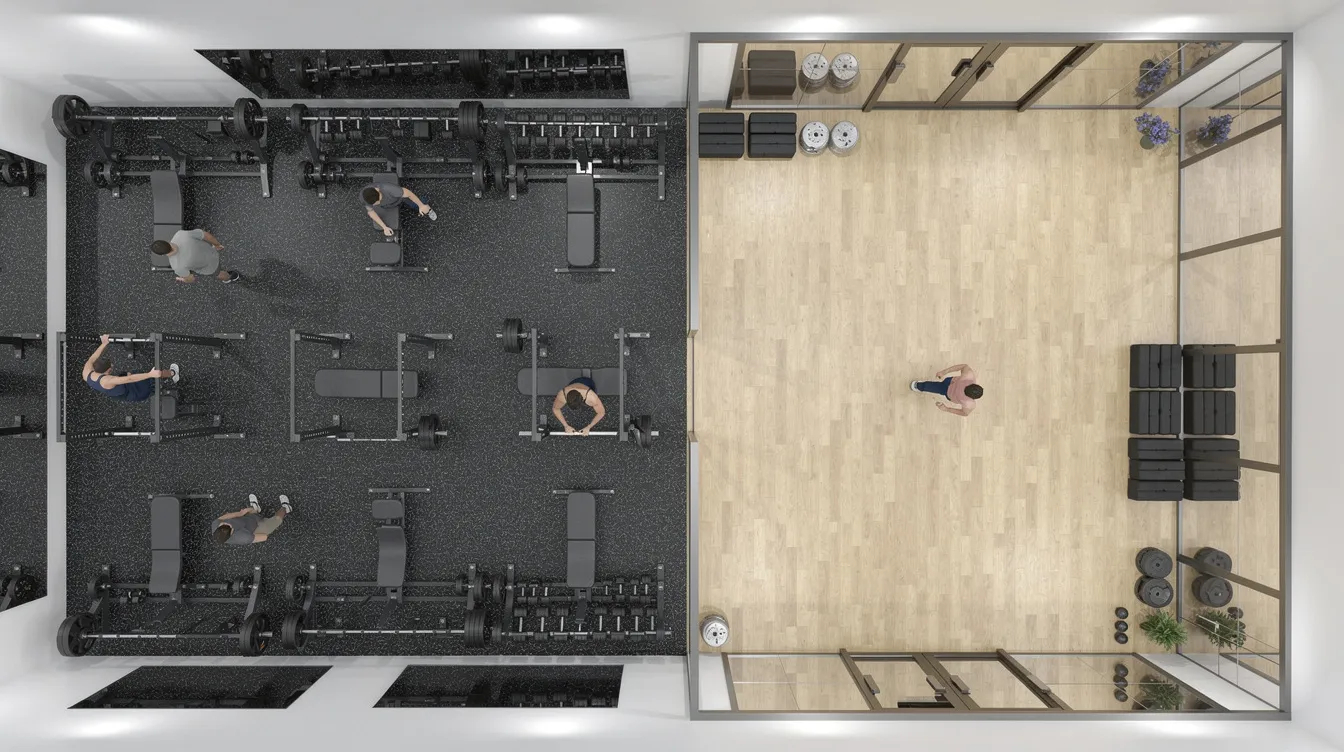
Premium or luxury gym flooring is most appropriate in environments such as:
- High-traffic commercial gyms
- CrossFit and functional training facilities
- Boutique fitness studios
- Long-term facility investments
- Multi-use athletic environments
- Spaces requiring acoustic or moisture control
- Facilities focused on the premium member experience
In these settings, flooring is not just a surface. It becomes part of the operational infrastructure of the business.
Decision Framework: When to Pay for Premium and When to Save
The right gym flooring choice depends on usage intensity, time horizon, and brand positioning. Consider these questions before choosing:
- What loads and thickness requirements will each area see?
- How many users will train on this surface daily?
- Is this space on an upper floor with noise-sensitive neighbors?
- What are your lease terms and renovation timeline?
- Does your business model depend on a premium aesthetic?
- What moisture and wellness considerations apply?
- Are you planning a residential garage setup or a commercial site?
Garage home gym
Combine mid-range rubber rolls across the main space with premium rubber mats under the power rack and deadlift area. This provides excellent shock absorption where it counts without overinvesting in low-impact corners.
For homeowners looking for a purpose-built solution, Specialized Fitness Resources’ garage gym flooring systems are designed to handle heavy equipment, free weights, and high-traffic training environments while helping protect the concrete subfloor and reduce noise. This hybrid approach delivers professional-level performance while keeping overall project costs under control.
Mid-size commercial facility (8,000–10,000 sq ft)
Invest in premium flooring in free weights, locker rooms, and group studios. Use mid-range rubber in cardio and selectorized strength zones. This zoned approach controls costs while maintaining durability and safety where it matters.
Boutique training studio
High-end flooring in member-facing zones is part of the brand promise. When you charge premium session rates and rely on social media visuals, the floor beneath the workout defines the space.
Also Read: Miami Gym Owners’ Guide: How Do Martial Arts Mats Differ from Yoga or Pilates Rubber Flooring?
Is Premium Gym Flooring Worth It?
Premium gym flooring is generally worth the investment in high-impact, high-traffic zones and long-term commercial operations – especially for free weights, functional training, and locker rooms. The longevity, safety, and aesthetic consistency it delivers are difficult to replicate with budget alternatives.
Budget or mid-range flooring solutions can be appropriate for light-use home gyms, low-impact studios, or temporary spaces with limited timelines. The hidden costs of cheap flooring – more frequent replacements, downtime, noise complaints, injury risk, and damaged subfloors or equipment – add up faster than most gym owners expect.
Evaluate each zone of your facility separately. Install premium where performance, safety, or brand perception are essential, and save where training loads allow it. The floor you choose today shapes every workout for years to come.
Also Read: What Are Good Flooring Solutions for Garage Gyms in Hot, Humid Climates Like Florida?
Get Expert Guidance on the Right Flooring Solutions for Your Facility
Every gym is different. The right flooring depends on your training zones, facility size, moisture exposure, and long-term goals, and getting that spec wrong is an expensive mistake.
Specialized Fitness Resources works with commercial gyms, boutique studios, CrossFit facilities, and training centers across Tampa and the surrounding area to match the right flooring system to every zone of the build. Whether you are outfitting a new facility from scratch or replacing flooring that has run its course, the team at Specialized Fitness Resources can walk you through the options, the specs, and the total cost picture.
Talk to a Flooring Specialist at Specialized Fitness Resources
Frequently Asked Questions
How long should quality gym flooring last in a busy commercial gym?
Premium vulcanized rubber lasts 15-25 years in general training areas with proper maintenance. Heavy free weight zones with repeated drops typically run closer to 10-18 years. Budget floors in high-traffic environments often need major repair or replacement within 3-8 years. Actual lifespan depends on traffic volume, cleaning practices, and whether the flooring is correctly matched to the training load in each zone.
What thickness of rubber flooring do I really need under free weights?
Around 3/8″ (9-10 mm) is the minimum for standard weight rooms with moderate, controlled drops. For heavy deadlifts and Olympic lifting, 1/2″ (12 mm) is the entry point, with 3/4″ (19 mm) the more common commercial recommendation where barbells are dropped regularly. Extreme drop zones in commercial CrossFit facilities may benefit from platforms up to 1″ thick. Upper-floor spaces require extra thickness for subfloor protection and noise control that concrete slab installations can sometimes forgo.
Can I mix budget and premium flooring in the same gym?
Yes. Many facilities combine premium tiles in lifting areas, mid-range rubber rolls in machine and cardio zones, and more economical options in storage or back-of-house spaces. Consistent color schemes, proper transitions, and quality edging help mixed systems look intentional rather than patchwork.
Is rubber flooring always better than vinyl flooring for gyms?
Not universally. Rubber is typically better for impact absorption, noise reduction, and free weight areas. Vinyl often wins on aesthetics and ease of maintenance in studios, lobbies, and multipurpose rooms. Choose based on the activity type and environment in each zone rather than assuming one material suits every room.
Do I need professional installation for premium gym flooring?
Interlocking tiles in smaller spaces can often be a DIY effort. Large commercial spaces involving glued-down rolls, vinyl, or turf systems benefit from professional installation to avoid seam failures, bubbles, and premature wear. Professional installers also handle subfloor preparation, moisture mitigation, and zone transitions – all factors that directly affect long-term performance.