
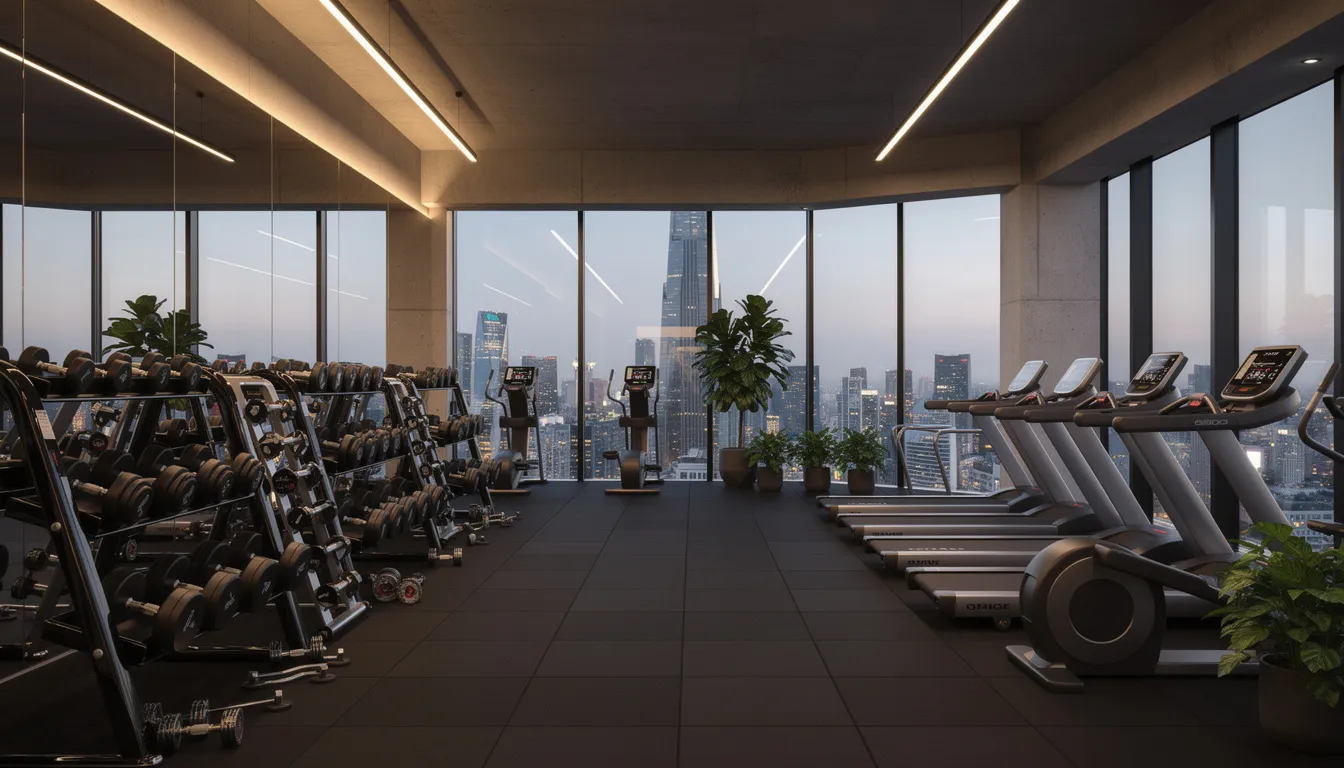
Upper-level fitness centers have become increasingly common throughout Miami, from luxury condominium gyms to hotel and mixed-use developments. As space becomes more valuable, developers and property managers are placing fitness amenities on second floors and above, often directly over residences, offices, or retail spaces.
While convenient and desirable, upstairs gyms introduce a significant challenge: managing impact noise and vibration. Activities such as dropping free weights, treadmill use, functional training, and group classes generate both airborne noise and structure-borne vibration that travel through concrete slabs and structural systems. Without proper mitigation, these forces can disrupt occupants below, trigger complaints, and in some cases lead to lease disputes or operational restrictions.
Flooring plays a central role in controlling these issues. Standard rubber flooring alone is rarely sufficient in multi-story buildings, particularly in Miami’s dense urban environment, where sound sensitivity is high, and construction assemblies vary widely. Effective noise and vibration control requires a properly engineered flooring system that combines impact absorption, acoustic isolation, and compatibility with the building’s structure.
Facing noise complaints or planning an upstairs gym? Specialized Fitness Resources has solved acoustic challenges in over 200 Miami-area fitness facilities. Our team combines SFR Sound Insulation technology with commercial-grade flooring systems to deliver proven, lab-tested results. Call 305-676-8923 for a free acoustic consultation and project assessment. We’ll help you specify the right solution before problems start.
This article explains how the right flooring systems, including specialized acoustic underlayments, help upstairs fitness centers in Miami significantly reduce sound and vibration. It also outlines key considerations for property owners, facility managers, and designers who want to protect adjacent spaces while maintaining safe, high-performance training environments.
Also Read: What Are Good Flooring Solutions for Garage Gyms in Hot, Humid Climates Like Florida?
Why Sound and Vibration Are Major Issues in Upstairs Fitness Centers
Upstairs gyms place heavy physical loads on building structures. The noise and vibration they generate behave very differently from typical office or residential sound, which is why they are a frequent source of complaints in multi-story buildings.
Two Types of Noise That Cause Problems
Upstairs fitness centers mainly produce two forms of disturbance:
Impact noise
Caused by dropped weights, jumping movements, and hard footfalls. This noise is sudden, forceful, and travels directly into the building structure.
Structure-borne vibration
Mechanical energy from impacts and equipment transfers into slabs, beams, and columns. Vibration can be felt even when the sound itself seems muted.
Impact noise is usually the greater challenge because it bypasses walls and ceilings and spreads through the structure itself.
Common Noise Sources in Fitness Facilities
Several everyday gym activities contribute to sound and vibration issues:
- Dropped barbells and bumper plates
- Weight stacks slamming on selectorized machines
- Treadmills and ellipticals create continuous low-frequency vibration
- Group fitness classes with jumping or plyometric movements
- Functional training rigs and dynamic bodyweight exercises
Even moderate daily use can create cumulative vibration in an upstairs setting.
Also Read: What’s the Best Gym Flooring Thickness for Home and Commercial Gyms in Miami? Find Out Here!
How Sound and Vibration Travel Through Buildings
The way a building is constructed directly affects how noise is transmitted:
Concrete slabs
Common in Miami high rises. Dense and rigid, they efficiently carry vibration across large floor areas.
Post-tensioned decks
Used in many newer developments. These systems can transmit vibration well beyond the immediate gym footprint.
Wood joist systems
Found in older low-rise buildings. These floors flex under load, which increases both noise and perceived movement.
Typical Complaints From Spaces Below
Occupants below the upstairs gyms frequently report:
- Ceiling rattling during peak workout hours
- Pictures or light fixtures shaking
- Thumping sounds early in the morning or late at night
- Ongoing disturbance that affects sleep or work productivity
- Music and reverberation bleeding through the floor system
Why This Matters for Gym Owners and Property Managers
Building managers and condo boards in Miami increasingly require acoustic studies and sound mitigation plans before approving upstairs fitness centers. Addressing sound and vibration at the flooring level during design or renovation is far more effective and cost-efficient than dealing with complaints, restrictions, or retrofits after the gym is operational.
Also Read: Foam vs Rubber: Which Flooring is Best for Your Home Gym in Miami?
What Makes SFR Sound Insulation Effective for Upstairs Gyms
SFR Sound Insulation is a resilient, flat underlayment engineered for fitness and sports applications. Unlike generic building underlayments, it is designed to handle heavy gym equipment, repeated impact, and high foot traffic while significantly reducing sound and vibration transfer into spaces below.
Installed directly beneath finished floors, such as rubber, LVT, tile, or hardwood, SFR creates an acoustic barrier that absorbs impact energy before it reaches the subfloor. It performs equally well over concrete slabs typical in Miami high-rises and wood joist systems common in older low-rise buildings, making it suitable for the diverse building stock across South Florida.
At just 5mm thickness, SFR outperforms thicker materials like cork or standard foam underlayments. This slim profile preserves ceiling height, maintains door clearances, and allows smooth transitions between flooring areas, all while providing superior sound control.
Key Features of SFR Sound Insulation
Shock and Impact Absorption
- Dampens energy from dropped weights, plyometric exercises, and high foot traffic.
- Protects both the subfloor and spaces below from structural vibration.
High Acoustic Performance
- Achieves IIC 72 (Impact Insulation Class) and STC 72 (Sound Transmission Class) with wood flooring assemblies.
- Meets or exceeds many condo HOA and hospitality acoustic requirements.
Testing and Validation
- Over 400 independent lab and field tests confirm consistent, real-world performance.
Dual Function
- Acts as a crack isolation membrane for tile, stone, and porcelain, protecting finished surfaces from minor subfloor movement or shrinkage cracks.
Durability
- Rated “extra heavy” by the Tile Council of North America.
- Withstands heavy gym equipment, rolling carts, and high-traffic use without compromising performance.
Compatibility With Flooring Types
- Rubber Gym Flooring: Compatible with high-density rolls, interlocking tiles, and Olympic lifting platforms.
- Tile, Stone, and Porcelain: Can be thin-set directly, eliminating the need for additional isolation membranes.
- Luxury Vinyl and Hardwood: Supports LVT and engineered wood, maintaining consistent acoustic performance and floor integrity.
Installation Advantages for Upstairs Fitness Centers
- Fast and Efficient: Rolls out flat, cuts easily, and integrates with conventional flooring methods.
- Multiple Thickness Options: Adjustable to meet acoustic targets, HOA requirements, or hospitality standards.
- Peel-and-Stick Versions: Simplify installation for occupied spaces or quick renovations.
- Minimized Downtime: Sections can be installed without closing entire facilities.
- Labor and Long-Term Savings: Reduces upfront labor and minimizes future costs from noise complaints or replacement.
Where and How Does SFR Sound Insulation Deliver Value in Miami Fitness Centers?
SFR Sound Insulation is designed to meet the diverse needs of upstairs fitness facilities while providing lasting economic and operational benefits. Its applications include:
- Condo and Apartment Fitness Centers: Reduce complaints from residents below and allow early morning or late evening workouts without disturbance.
- Hotel Gyms Above Guest Rooms: Maintains a quiet guest experience in boutique and resort properties.
- Second-Floor Commercial Gyms: Effective in mixed-use developments and urban corridors, supporting CrossFit and functional training areas.
- Multi-Purpose Sports and Training Areas: Compatible with yoga, Pilates, cycling, and functional training rooms above offices or retail spaces.
- Retail and Mixed-Use Developments: Integrates seamlessly in gyms stacked over restaurants, offices, or residential units.
Economic and Long-Term Benefits
- Avoids Costly Retrofits: Proper acoustic specification during initial build-out prevents expensive tear-outs, occupancy delays, and potential legal disputes.
- Improves Tenant and Resident Satisfaction: Quieter gyms reduce conflicts, lower turnover, and increase lease renewal rates.
- Durable and Low Maintenance: Maintains acoustic performance under heavy loads, repeated impacts, and peak-hour traffic without degradation.
- Enhances Reputation and Brand Value: Controlled noise improves reviews, referrals, and positions properties as premium, well-managed spaces.
- Creates a Better Training Environment: Reduces reverberation and overall noise, allowing clearer music, improved focus, and a higher-quality gym experience.
By combining versatile applications with long-term value, specialized insulation ensures that upstairs gyms in Miami deliver exceptional performance, safety, and acoustic comfort while protecting property investment.
Choosing the Right Soundproof Gym Flooring System for Upstairs Gyms in Miami
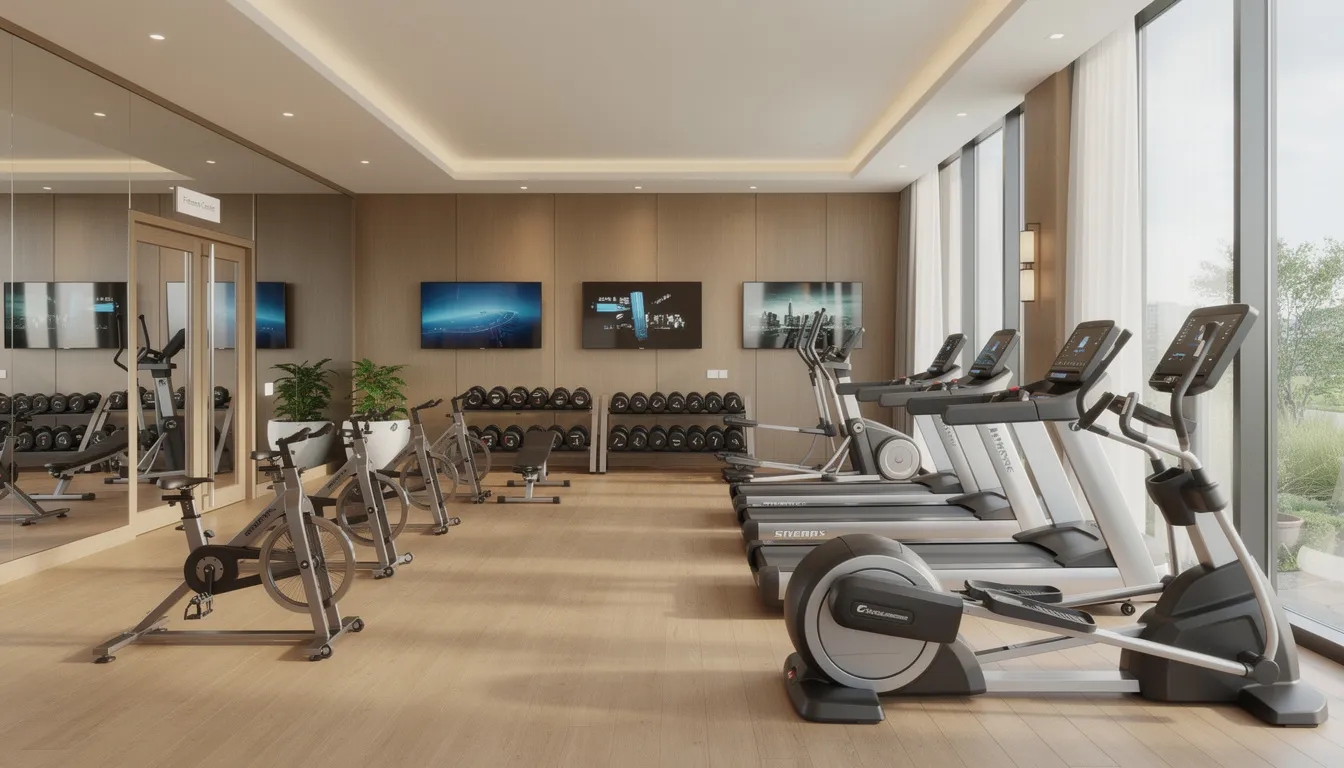
Real-world acoustic performance depends on the complete system: underlayment, gym flooring, and professional installation. Here’s how to approach it.
Pairing SFR Sound Insulation with Rubber Flooring
Most upstairs gyms achieve optimal results by combining SFR Sound Insulation with commercial-grade rubber:
- Rubber rolls for large open areas and functional training zones
- Rubber tiles for weight rooms with heavy barbell use
- Foam or thinner rubber in stretching or low-impact areas
- Thicker rubber for Olympic lifting platforms
Assessing Activity and Equipment
Evaluate the facility’s specific demands:
| Factor | Lower Acoustic Demand | Higher Acoustic Demand |
|---|---|---|
| Activity type | Light cardio, stretching | Olympic lifting, HIIT |
| Equipment loads | Machines, light dumbbells | Barbells, heavy weights |
| Drop heights | Minimal | Regular overhead drops |
| Hours of operation | Daytime only | 5 a.m. to 11 p.m. |
Traffic and Wear Considerations
- 24/7 condo gyms require durable rubber densities
- Resort gyms experience concentrated peak-season use
- Commercial gyms with group classes generate more impact
- Surface finishes must align with cleaning and maintenance protocols
Importance of Professional Installation
Correct installation ensures performance and acoustic ratings:
- Proper substrate preparation
- Correct adhesive selection and application
- Seam treatment between material sections
- Smooth transitions at doorways and adjacent flooring
Even premium materials can underperform if installed incorrectly. Impact absorption relies on both material quality and proper installation.
How Specialized Fitness Resources Supports Your Project
- Product selection: Match underlayment and surface materials to your acoustic goals
- Specification support: Provide CAD layouts and acoustic data for architects and consultants
- Material supply: Deliver commercial gym flooring and SFR Sound Insulation
- Installation: Professional crews ensure turnkey execution in Miami
Partnering with fitness flooring specialists ensures your upstairs gym space meets both acoustic expectations and performance standards while protecting the building and enhancing the user experience.
Also Read: Rubber Gym Flooring Tiles vs. Rolls: Which Option is Best for Your Miami Facility?
Ready to Eliminate Noise and Protect Your Investment?
Upstairs gyms in Miami face unique challenges from impact noise, vibration, and structure-borne sound. SFR Sound Insulation, paired with the right gym flooring, provides a proven, lab-tested solution with IIC 72 and STC 72 ratings, a slim 5mm profile, and over 400 independent tests validating performance.
Whether you are designing a new condo amenity gym, renovating a hotel fitness room, or resolving noise complaints in an existing facility, addressing soundproofing early saves time, money, and long-term headaches.
Specialized Fitness Resources is your partner for complete acoustic rubber fitness flooring solutions
- Expert product selection for fitness and sports spaces
- Acoustic specifications and CAD support for architects and consultants
- Professional installation ensuring maximum impact absorption and sound control
Call us today to discuss SFR Sound Insulation and turnkey acoustic flooring systems. Let us help you create a quieter, safer, and more enjoyable upstairs fitness environment for your members, guests, and residents.
Frequently Asked Questions
Can SFR Sound Insulation be installed in an occupied building without disrupting operations?
Yes. SFR Sound Insulation is particularly suited for renovations in occupied buildings. The peel-and-stick version eliminates adhesive curing time, and installation can be completed in sections, allowing portions of the gym to remain operational. The thin 5mm profile means minimal floor height changes, reducing the need for extensive door or threshold adjustments.
How does SFR Sound Insulation perform in Miami’s humid climate?
SFR Sound Insulation is moisture-resistant and dimensionally stable, making it ideal for South Florida’s high-humidity environment. Unlike cork or foam underlayments that can degrade or compress with moisture exposure, SFR maintains its acoustic performance and structural integrity even in non-climate-controlled spaces or areas with heavy perspiration and cleaning.
What is the expected lifespan of SFR Sound Insulation under heavy gym use?
When properly installed, SFR Sound Insulation maintains its acoustic performance for the lifetime of the flooring system above it, typically 15-20+ years in commercial fitness applications. Its “extra heavy” rating from the Tile Council of North America confirms it won’t compress or lose effectiveness under heavy equipment loads or repeated impacts.
Does SFR Sound Insulation require special maintenance or inspection?
No. Once installed beneath your gym flooring, SFR Sound Insulation is a passive system requiring zero maintenance. There are no components to replace, adjust, or inspect. The acoustic performance remains constant throughout the product’s lifespan without degradation.
Can SFR Sound Insulation be used with existing gym flooring, or does it require a complete tear-out?
SFR Sound Insulation requires installation between the subfloor and finished flooring, so it cannot be retrofitted under existing gym floors. However, if you’re experiencing noise complaints, SFR can be installed during planned flooring replacement or facility upgrades, turning a necessary renovation into a permanent acoustic solution.